In shortHiroshima Peace Memorial Park covers approximately 122,100 square metres on the land between two rivers and was completed on 1 April 1954, to a plan by three architects including Kenzo Tange that was placed first out of 145 competition entries. The axis runs from the Atomic Bomb Dome across the river to the Children's Peace Monument, then the Flame of Peace, the Cenotaph and the Peace Memorial Museum, with the National Peace Memorial Hall beside the museum.
122,100 m²Park area
1 April 1954Park completed
145 entriesDesign competition
5 December 1996Dome inscribed by UNESCO
Why the whole park reads as one piece of design work
The ground here was drawn before it was built. A competition brought in 145 entries, the winning plan came from three architects, Kenzo Tange among them, and the park was completed on 1 April 1954, approximately 122,100 square metres on the spit of land between two rivers.
That plan works by alignment. Stand at the Cenotaph and you look north through its arch, past the Flame of Peace and over the water to the Atomic Bomb Dome on the far bank. Turn around and the same line runs south to the Peace Memorial Museum. Every park map shows the same arrangement: one axis, the other monuments set off to either side of it, lawns and lines of trees in between.
The Dome at the northern end was inscribed on the UNESCO World Heritage List on 5 December 1996, at the committee meeting in Mérida, Mexico. The park around it is open ground you cross at your own pace, and the buildings on it keep their own hours.
What to see in Peace Memorial Park, in walking order
Start at the Atomic Bomb Dome and walk south. Most people look at the Dome from the embankment and from the bridge rather than going inside, and that is the whole stop, then cross the river into the park proper and pick up the axis.
The monuments come in a sequence, and at each one there is something people actually do: ring a bell, leave folded cranes, stand still for a minute.
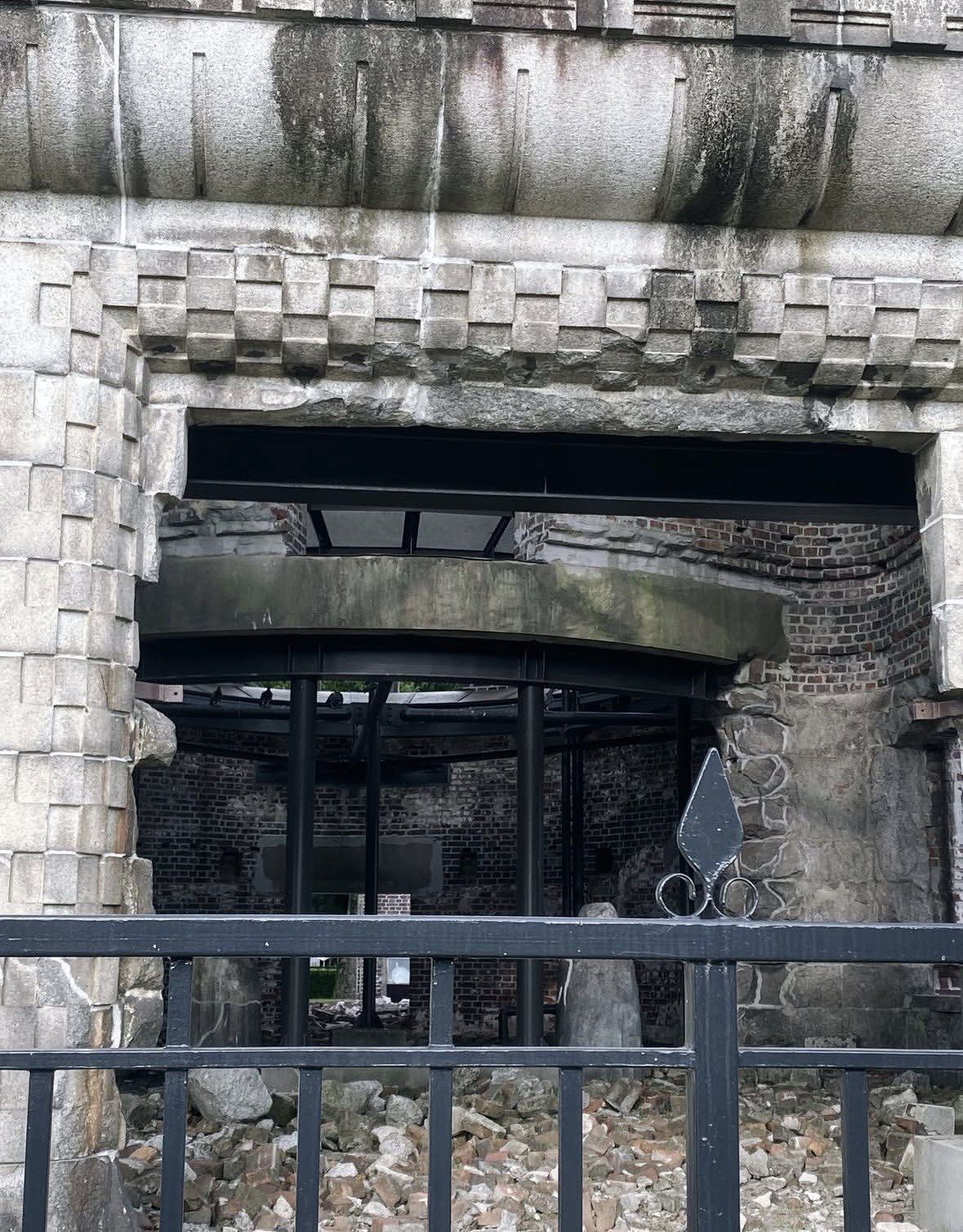
- Atomic Bomb Dome: the preserved skeletal building at the north end of the park, seen from outside, from the riverbank and from the bridge.
- The river crossing: the bridge takes you from the Dome into the park and onto the central axis, and the pier for the boat to Miyajima is at Motoyasu Bridge beside the park.
- Children's Peace Monument: strings and panels of folded paper cranes are left here by visitors and school groups, and there are new ones on any day you come.
- Flame of Peace: kept burning on the axis between the Cenotaph and the Dome, and usually seen from the Cenotaph side looking north.
- Cenotaph for the A-Bomb Victims: the saddle-shaped arch at the centre of the park, where people bow or stop for a moment, and the 6 August ceremony is held in front of it.
- Hiroshima National Peace Memorial Hall for the Atomic Bomb Victims: a largely underground memorial space beside the museum, with the hall of remembrance and survivor testimony; its hours are shorter than the museum's, so take it before or after.
- Hiroshima Peace Memorial Museum: at 1-2 Nakajima-cho, Naka-ku, at the south end of the axis, and the one stop inside the park that needs a real block of time.
Each monument explained on the spot
Five hours on foot through the World Heritage sites with a certified guide, entrance to the Peace Memorial Museum and Orizuru Tower included, and each monument explained at the point you reach it.
★ 5.0/5 · 1,052 reviews
Getting there from JR Hiroshima Station
Two tram approaches work from the station. Trams signed for Eba or Miyajima put you down at Genbaku Dome-mae after about 25 minutes, then it is roughly ten minutes on foot; trams for Ujina stop at Fukuro-machi, the same ten-minute walk from the park. Line 1 or bus 24 from the south exit runs to Hon-dori in about 20 minutes, five minutes on foot from there, and brings you in through the shopping arcades instead of past the Dome.
No tickets are sold on board Hiroden trams and you pay as you get off, with IC cards touched both on boarding and on alighting. The sightseeing loop bus from the Shinkansen exit also calls at Genbaku Dome-mae and Heiwa Koen-mae on its single reorganised route, daily from 9:00 to 18:00 at intervals of 10 to 15 minutes, 42 trips a day.
Coming by car is the awkward option. The National Peace Memorial Hall has no public parking except for visitors with physical disabilities, and its own site recommends public transport.
Hours in the park, 6 August and the season
The park is open ground, so the clock that matters belongs to its buildings. The museum has unusually long days, the Memorial Hall opens later and shuts earlier, and both are better done in one go than split across the day.
Two museum closures are worth checking before you fix a date: 30 and 31 December, and a few days in mid-February for an exhibition changeover.
On 6 August the Peace Memorial Ceremony runs from 8:00 to 8:50 a.m. in front of the cenotaph, with a one-minute silence at 8:15 a.m. The central part of the park is given over to the ceremony that morning, and the museum stays open until 9:00pm on the 5th and the 6th.
Nearly all the walking here is in the open, so the season is felt. August averages a daily high of 32.8C and a low of 25.1C, so carry water and use the museum's long hours to sit out the afternoon. The rainy season normally runs from around 6 June to around 19 July, and July is the wettest month at 279.8 mm. Cherry blossom normally flowers on 25 March with full bloom on 3 April; Japanese maple colours around 22 November, when the light goes early.
| Inside the park | Opening hours |
|---|
| Hiroshima Peace Memorial Museum | Opens 7:30am; closes 7:00pm March to July and September to November, 8:00pm in August (9:00pm on 5 and 6 August), 6:00pm December to February |
|---|
| Hiroshima National Peace Memorial Hall | Opens 8:30am; closes 6:00pm March to November, 7:00pm in August, 5:00pm December to February |
|---|
| Orizuru Tower observation deck | Deck open 10:00 to 18:00, last admission half an hour before closing |
|---|
What a guide adds when you walk the park monuments
Walked without commentary, the park is easy to follow and tells you very little. There is barely any explanatory text at the monuments themselves, and the museum's account of them sits at the far end of the axis, after you have already passed everything.
Volunteer explanations do exist. Hiroshima Peace Volunteers, organised through the Peace Culture Foundation, explain the museum exhibits and the monuments in and around the park. They do not operate in July, August or September, or on any day a heatstroke alert is in force, which takes out the whole hot season.
A guided walk takes the monuments in order and the commentary arrives as you reach each one. The five-hour walking day through the World Heritage sites covers the park cluster on foot with a certified guide and includes entrance to the Peace Memorial Museum and Orizuru Tower, plus lunch. It meets in front of the mont-bell store near Nishi Kamiyacho, a minute from the stop, and anyone arriving more than 15 minutes late cannot join.
If the park is one half of a day that also crosses to Miyajima, the 8-hour bus day covers more ground: an English-speaking local guide, multilingual audio in the bus in EN, FR, ES, IT, DE, PT and UA, the round-trip ferry and admissions for the Peace Memorial Museum, Miyajima Island and Itsukushima Shrine. A group that wants its own order and pace can take the 8-hour private day with a licensed local English-speaking guide, picking 3 to 4 sites from the itinerary list, with transport, entrance fees, lunch and the Miyajima visitor tax (cash only) not included.
- Park and museum on foot, no crossing: Hiroshima Peace (Heiwa) Walking Tour at World Heritage Sites, 5 hours, from 13,600 yen, 5.0 ★ (1,052 reviews).
- Park plus the island in one guided day: Peaceful Hiroshima & Miyajima UNESCO 1 Day Bus Tour, 8 hours, from 19,488 yen, 5.0 ★ (9,528 reviews), meeting 10:00am at Hiroshima station, 2F in front of the Shinkansen ticket gate, North Gate.
- Your own route and pace: Hiroshima & Miyajima in 1 Day: Private Tour, Licensed Guide, 8 hours, from 30,900 yen, 4.9 ★ (1,610 reviews), met on foot in Hiroshima.
Questions people ask
How long should I allow for Peace Memorial Park?
The prefectural tourism board's own one-day plan allots 30 minutes at the Atomic Bomb Dome and 60 minutes inside the Peace Memorial Museum, within about 220 minutes of stops for the whole Hiroshima and Miyajima day. Thirty minutes at the Dome matches what most people actually do. Give the museum more than an hour if your schedule allows, because that is the part of the park people routinely underestimate.
Do I need a reservation to use the museum's earliest hours?
Yes. The museum opens at 7:30am all year, but entry to the permanent exhibition during the early-morning and late-evening extension windows requires an online reservation, so turning up at 7:30 without one does not work. With the reservation, 7:30am puts you inside well before the group arrivals. December to February the day ends earlier, at 6:00pm.
What else stands on the edge of the park?
Orizuru Tower is at 1-2-1 Ootemachi, about one minute on foot from the Genbaku Dome-mae tram stop. The rooftop viewpoint is called HIROSHIMA HILLS, the 12th floor holds ORIZURU SQUARE and the ORIZURU WALL origami-crane installation, and the ground floor has a cafe, a shop and an okonomiyaki restaurant. The deck opens 10:00 to 18:00 and is included on the 5-hour walking day.
Can I go straight from the park to Miyajima by boat?
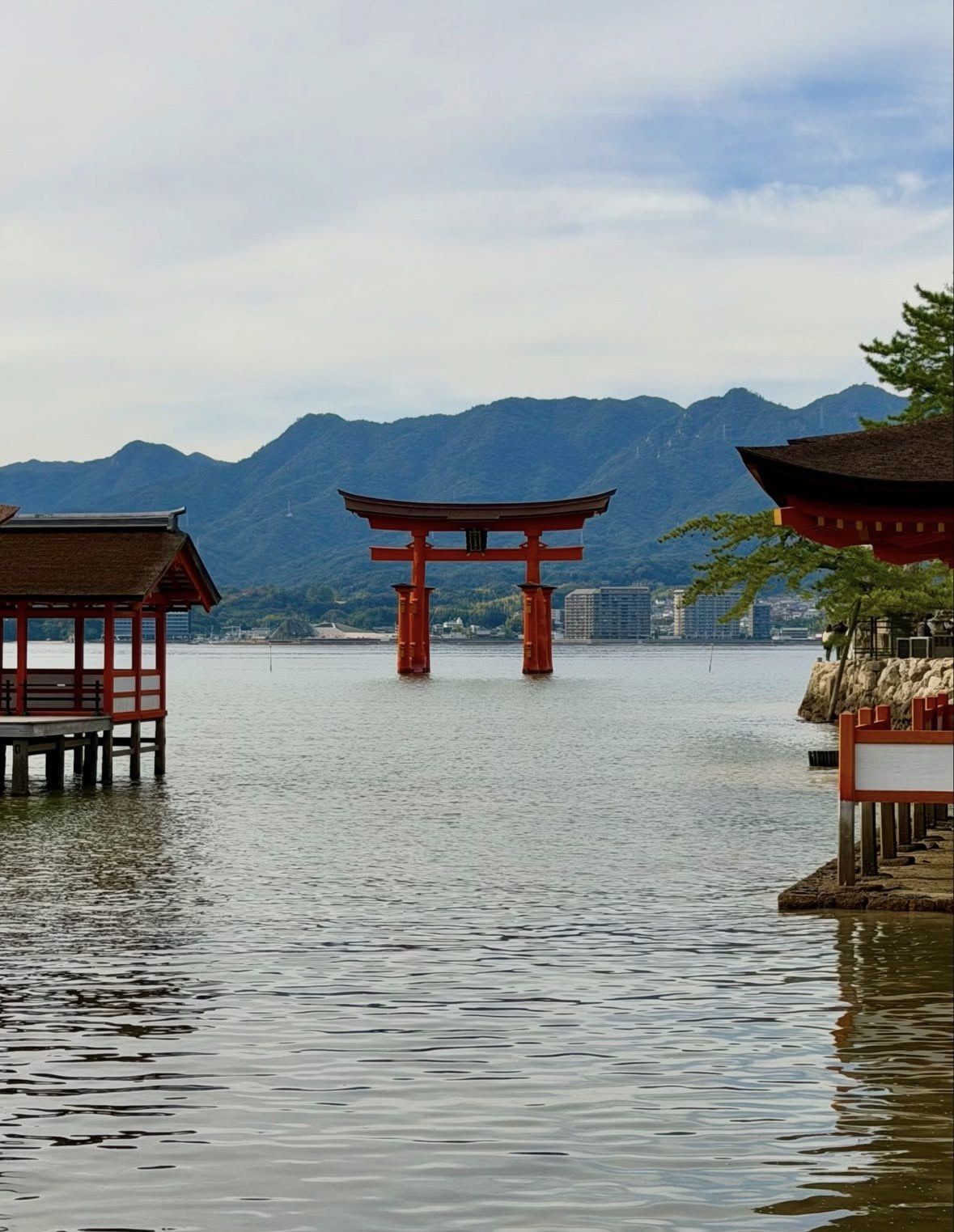
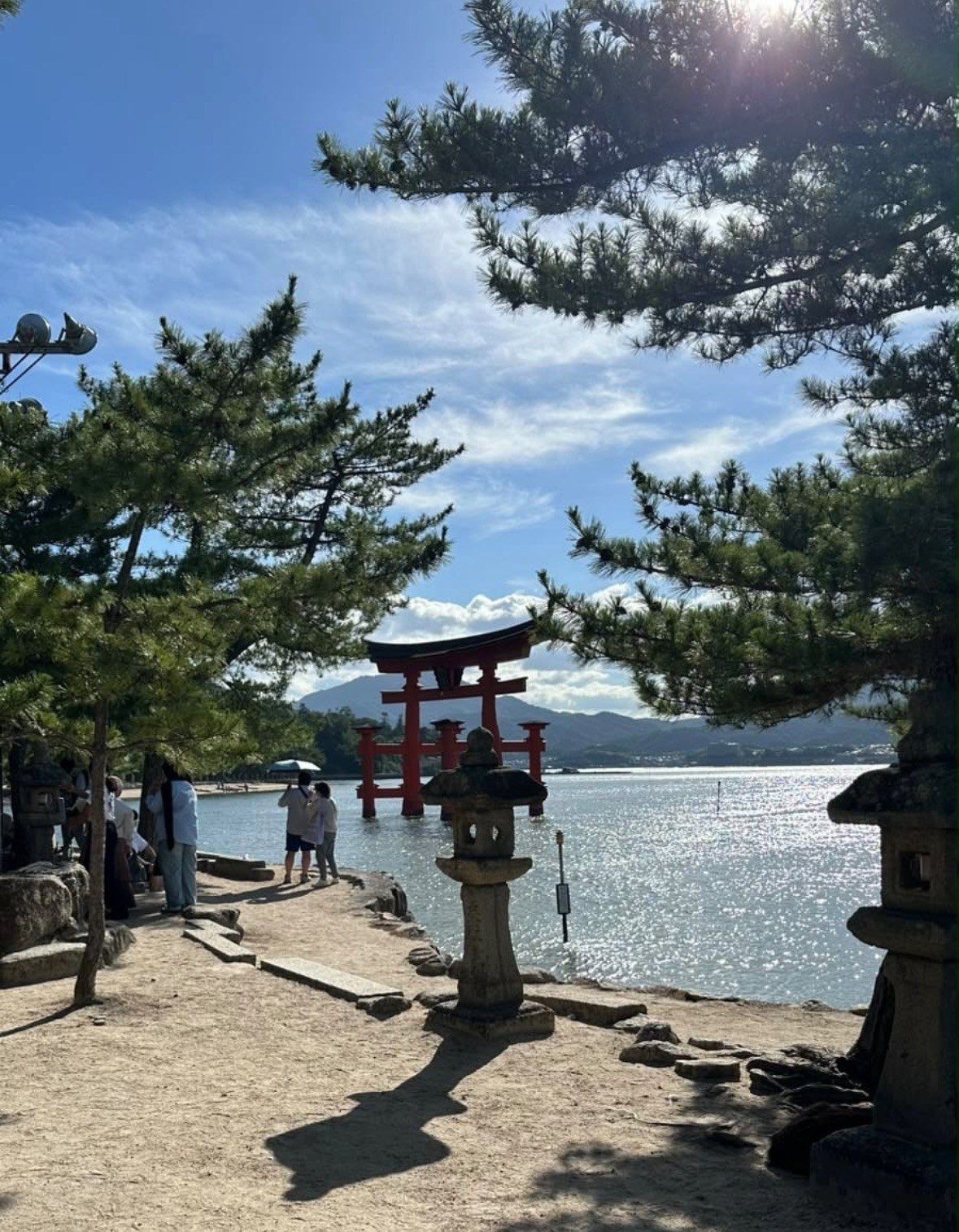
The World Heritage Sea Route boat leaves the Motoyasu Bridge pier beside the park and runs direct to Miyajima in about 45 minutes each way. The other way round is a tram or train to Miyajima-guchi and then a crossing of about 10 minutes, with departures roughly every 15 minutes through the middle of the day and gaps of 20 to 30 minutes early and late. Check the sailings on the day.
Is the Memorial Hall open the same hours as the museum?
No. The Hiroshima National Peace Memorial Hall for the Atomic Bomb Victims opens at 8:30am and closes at 6:00pm from March to November, 7:00pm in August and 5:00pm from December to February, so it starts an hour after the museum and finishes earlier. It has no public parking other than for visitors with physical disabilities, and its own site recommends arriving by public transport.
Read also