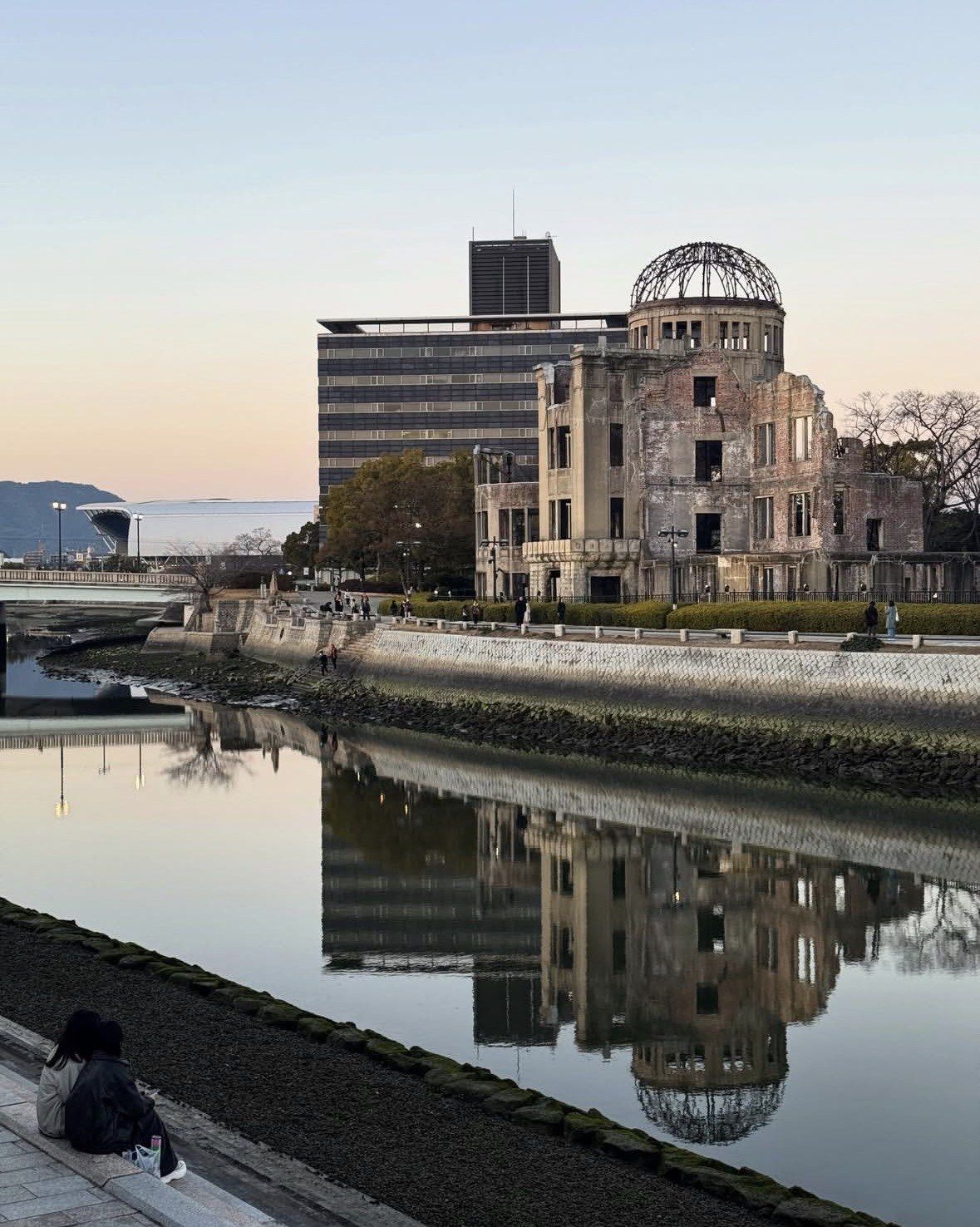
In shortYes. Two World Heritage sites sit close together here: the Atomic Bomb Dome, inscribed on 5 December 1996, and Itsukushima Shrine on Miyajima, registered the same year and dating its founding to 593. Peace Memorial Park and its museum, the tidal shrine, the castle quarter with Shukkeien and a plate of layered okonomiyaki make a full day. Two nights cover all of it without rushing.
5 December 1996Atomic Bomb Dome inscribed
1996Itsukushima Shrine registered
about 220 minutesstops in the one-day course
1 hour 25 minutesShin-Osaka to Hiroshima
Is Hiroshima worth visiting on a tight Japan route
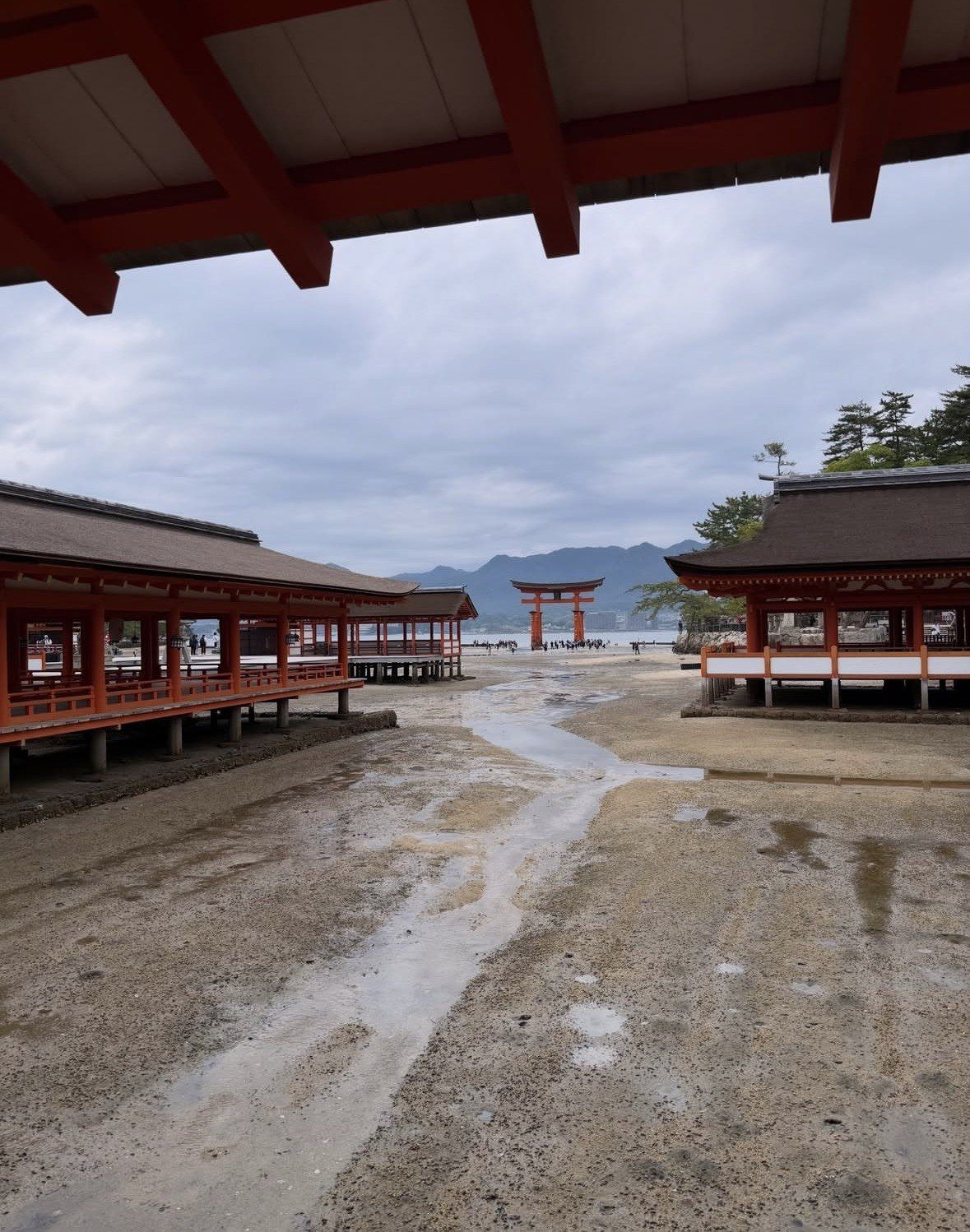
Yes, and the reason is as much geographic as historical. Two World Heritage sites sit within an hour of each other. UNESCO added the Atomic Bomb Dome to its World Heritage List on 5 December 1996, a decision taken at the committee meeting in Mérida, Mexico. Miyajima's Itsukushima Shrine entered the list in that same year and carries national treasure status; its own history puts the founding at 593, the year Empress Suiko came to the throne, with Taira no Kiyomori rebuilding it in shinden-zukuri style in 1168.
The two are unlike each other, which is what makes the pairing worth the detour. One is a twentieth-century memorial inside a designed park; the other is medieval architecture standing over tidal water, reached by a crossing of about 10 minutes from Miyajima-guchi. Covering both means real ground between them, and that is why the full-day guided options run eight hours or more instead of half a day.
What you actually see in the city and on the island
Four things carry the visit, and each runs to its own clock. Read the hours below before you fix the order of your day.
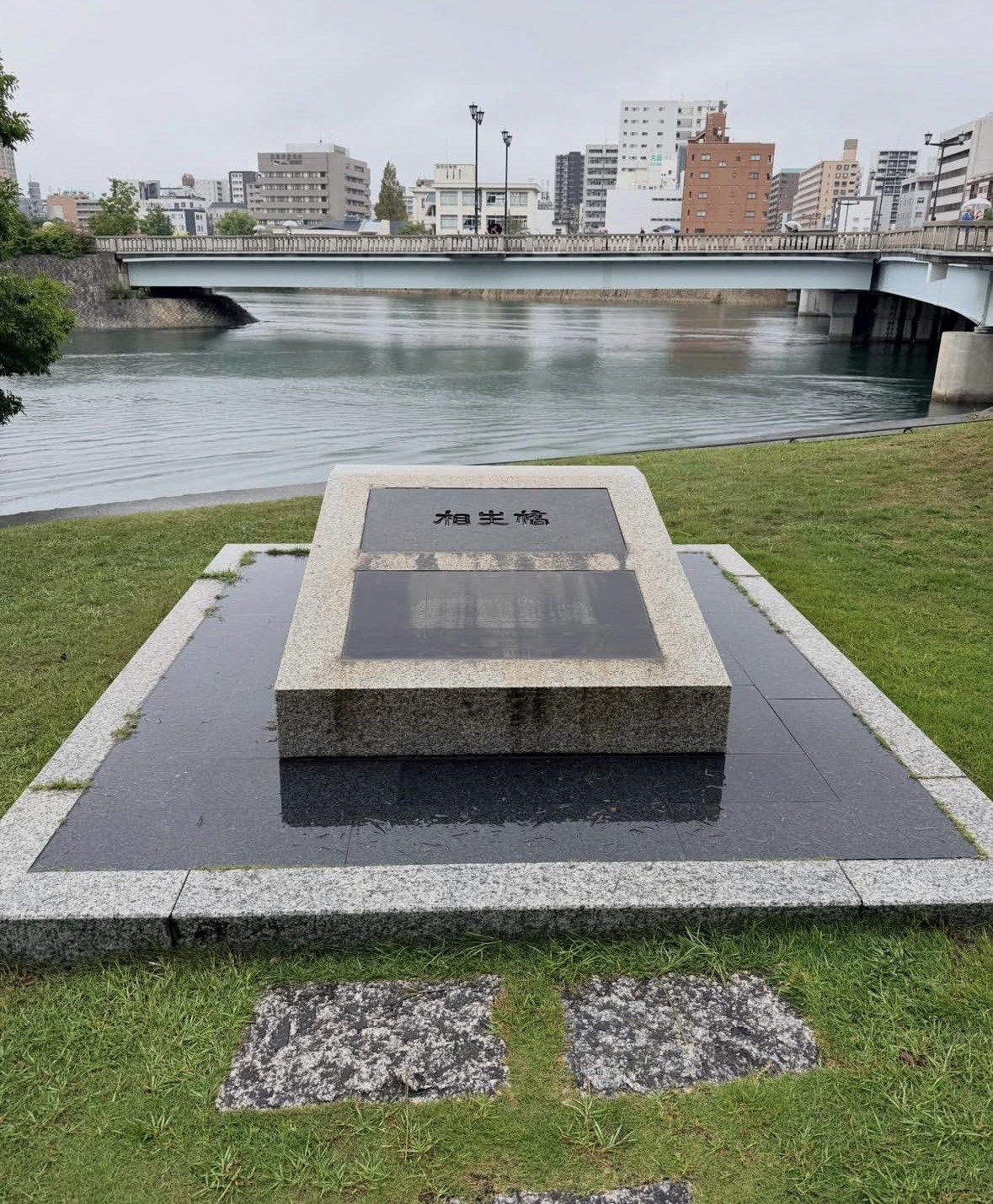
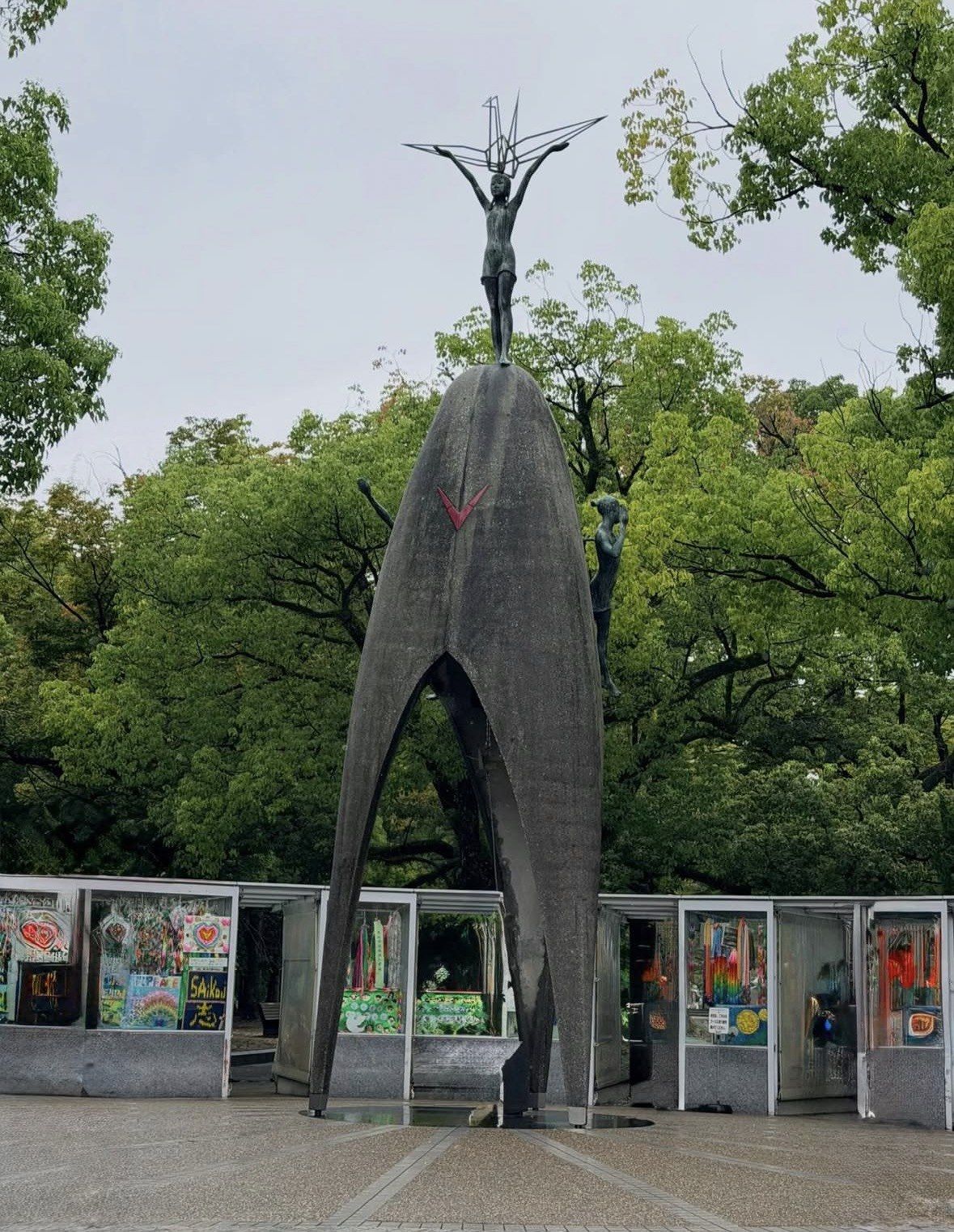
- Peace Memorial Park and the Peace Memorial Museum. The park is a designed landscape of approximately 122,100 square metres, completed on 1 April 1954 to a scheme by three architects including Kenzo Tange, chosen first out of 145 competition entries. According to the museum's own site the doors go back at 7:30am, with closing at 7:00pm March through July and again September through November, 8:00pm in August and 6:00pm from December to February; the permanent exhibition can be entered in the early-morning and late-evening extension windows only with an online reservation. The National Peace Memorial Hall stands beside it, opening at 8:30am and closing earlier than the museum, and the institution itself recommends arriving by public transport.
- Miyajima and Itsukushima Shrine. Hours move with the season: 6:30am to 6:00pm from 1 March to 14 October is the longest stretch, then 5:30pm from 15 October to 30 November and from 4 January to the end of February, and 5:00pm for the whole of December. Whether the shrine appears to float, and whether the Great Torii can be reached on foot, is set by the tide table the Miyajima Tourist Association publishes daily, and on many days there is no torii-walk window at all. Uphill ropeway departures above the town run from 9:00 to 16:00 with the last descent at 16:30, while walkers have three official trails up Mt. Misen, each roughly 1.5 to 2.5 hours from the town.
- The castle quarter and Shukkeien. Plan the castle as something you look at from outside: the main keep has been shut since March 2026, the stated reasons being deteriorating concrete and ageing building services. The reconstructed Ninomaru buildings still take visitors, 9:00 to 17:30 April to September and 9:00 to 16:30 October to March, last entry half an hour before, and both keep and Ninomaru are lit from sunset until 22:00. Next door to Shukkeien stands the Prefectural Art Museum; the garden itself goes back to Genna 6 (1620), when Hiroshima's lord Asano Nagaakira had it made as a villa garden to a plan by Ueda Soko, his chief retainer and tea master, and it opens 9:00 to 18:00 from 16 March to 15 September and 9:00 to 17:00 from 16 September to 15 March.
- The food. Okonomiyaki here is built in layers instead of stirred together: thin crepe first, then cabbage, meat or seafood, fried noodles and an egg on top, a method credited to Mitchan Sohonten. No prefecture in Japan produces more oysters, and the local ones are small, slightly sweet and hold little liquid, which is why counters in izakaya and teppanyaki places grill them. Near Miyajima-guchi station, Ueno is the name attached to anago-meshi, grilled conger eel over rice cooked in eel-head stock, and summer and weekend queues there can run to an hour. For drinking, there is Nagarekawa, reached directly from the Ebisucho or Hatchobori tram stops, plus the Hondori arcades, and Ekinishi, set in renovated Showa-era buildings west of JR Hiroshima Station.
Is Hiroshima worth a day trip from Osaka, Kyoto or Tokyo
From Kansai, yes. From Tokyo, only if you accept spending most of the day on a train. A Nozomi covers Shin-Osaka to Hiroshima in about 1 hour 25 minutes, and Mizuho matches it: Mizuho 601 leaves Shin-Osaka at 06:00 and arrives at 07:25, stopping only at Shin-Kobe, Himeji and Okayama. Kyoto is about 1 hour 40 minutes out on a Nozomi. Tokyo to Hiroshima by Nozomi is about 3 hours 54 minutes each way, which turns a day trip into roughly eight hours of travel around 220 minutes of stops.
Two service details catch people out. Mizuho and Sakura originate at Shin-Osaka rather than Kyoto, so from Kyoto those trains mean changing at Shin-Osaka, and some departures that look useful are not through services: Hikari 681 skips Kyoto entirely and Hikari 701 terminates at Okayama. For 2026-27 the listed peak periods, when every seat on a Nozomi becomes reserved, are 21-23 November and 25 December to 5 January.
A day trip has to be budgeted in minutes. Stop times in the prefectural tourism board's own one-day Hiroshima and Miyajima course read 30 minutes at the Atomic Bomb Dome, 60 inside the Peace Memorial Museum, 45 on the water and 60 at Itsukushima Shrine, which comes to roughly 220 minutes standing still, with the travel between them still to be added. Squeeze that into one day and the first things to go are Mt. Misen, since uphill cars stop at 16:00, and the castle quarter with Shukkeien. Keep the museum and the shrine, and accept that 60 minutes in the museum is short for what is in it.
| From | Service | Travel time |
|---|
| Shin-Osaka | Nozomi or Mizuho | about 1 hour 25 minutes |
|---|
| Shin-Osaka | Sakura | roughly 1 hour 30 minutes |
|---|
| Shin-Osaka | Hikari | about 1 hour 50 minutes |
|---|
| Shin-Osaka | Kodama, 11 intermediate stops | about 2 hours 35 minutes |
|---|
| Kyoto | Nozomi | about 1 hour 40 minutes |
|---|
| Tokyo | Nozomi, via Nagoya, Kyoto and Okayama | about 3 hours 54 minutes |
|---|
City centre in five hours
If the train times leave you a morning and an afternoon in Hiroshima itself, this 5-hour walking day takes in the park, the museum and Orizuru Tower with a certified guide and lunch, and leaves the island crossing for another trip.
★ 5.0/5 · 1,052 reviews
One day, or two nights with the island
Give Hiroshima two nights if your route can absorb them, and spend the second one on Miyajima. Two things on the island are out of your hands. The tide windows are set by nature and will not always line up with a fixed-departure day, and the ropeway stops carrying passengers uphill at 16:00, shuts down completely for periodic inspection at announced intervals, and can be suspended for high wind, thunder or power failure. A night on the island lets you take the shrine at closing time, after the day boats have gone, and catch whichever tide window the first day missed.
One day works if you accept the order. Between March and mid-October, start in the park at the museum's 7:30am opening, remembering that the early-morning window needs a reservation for the permanent exhibition, then cross to the island and stay until the shrine closes at 6:00pm. The shrine's closing falls to 5:30pm from 15 October, and to 5:00pm through December, so reverse the day: island first, museum last, since it stays open to 7:00pm from September through November and to 6:00pm from December to February.
Wanting Mt. Misen, the castle quarter, Shukkeien and a city museum on top of the park and the shrine means two full days rather than one. Three is worth it only if you add somewhere outside the city, such as Iwakuni, Kure or Onomichi.
Who finds the museum hard going
The permanent exhibition is direct and unsparing. Not every traveller, and not every child, should be walked straight through it on a tight clock. If that describes your group, shorten the museum visit instead of dropping the park: the Dome, the cenotaph and the walk across the park read clearly on their own, and the National Peace Memorial Hall beside the museum is the quieter of the two, opening at 8:30am and closing before the museum does.
Two lighter stops sit close by. Orizuru Tower is a minute's walk from the Genbaku Dome-mae tram stop, at 1-2-1 Ootemachi; the deck runs 10:00 to 18:00, with ticket sales and deck entry stopping half an hour earlier, and street level holds a cafe and an okonomiyaki restaurant. Hiroshima City Museum of Contemporary Art, up in Hijiyama Park, opened on 3 May 1989 as Japan's first public museum devoted to contemporary art, to a design by Kisho Kurokawa, and runs 10:00 to 17:00, closed Mondays.
Check your dates against the museum calendar before you fix anything else. Closed days are 30 and 31 December, plus a short mid-February break while the exhibition is changed over. August brings an 8:00pm close, pushed to 9:00pm on the 5th and 6th.
Guided days that make a short stop work
A guided day takes the two timing problems off your hands: the gap between the city and the island, and the admissions at both ends. Peaceful Hiroshima & Miyajima UNESCO 1 Day Bus Tour fills 8 hours, from 19,488 yen, 5.0 ★ (9,528 reviews), with a 10:00am meeting on 2F at Hiroshima station, in front of the Shinkansen ticket gate on the North Gate side. Covered in the price: an English-speaking local guide, bus audio guidance in EN, FR, ES, IT, DE, PT and UA, an air-conditioned vehicle, the ferry both ways, admission for the Peace Memorial Museum, Miyajima Island and Itsukushima Shrine, and lunch if you pick that option. Hotel pickup, other food and drinks and gratuities are not included.
For a centre-only half day with no crossing, the Hiroshima Peace (Heiwa) Walking Tour at World Heritage Sites runs 5 hours on foot, from 13,600 yen, 5.0 ★ (1,052 reviews); a certified guide, lunch and entry to the Peace Memorial Museum and Orizuru Tower come with it. The meeting point is the mont-bell store near Nishi Kamiyacho, one minute from the stop, and anyone more than 15 minutes past the meeting time is turned away.
Evenings have their own option. The Hiroshima Izakaya Food and Drink Night Tour runs 3 hours, from 13,500 yen, 4.9 ★ (355 reviews), and meets outside the Hiroshima Fukuya department store in front of the GUCCI display. It includes a certified guide, 3 drinks chosen from the menu, 2 food plates and an okonomiyaki plate, so the layered local version gets eaten before you leave town.
Questions people ask
Is Hiroshima worth visiting with children?
The island side suits families better than the museum side. Miyajima gives you the shrine over the water, the Treasure Hall from 8:00 to 17:00 and Senjokaku from 8:30 to 16:30 all year, and the ropeway toward Mt. Misen while uphill cars are still running before 16:00. In the city, Shukkeien and the lit castle exterior after sunset work well; keep the museum visit short and let the walk across the park carry the rest.
When is the best season to visit Hiroshima?
Late March to early April and the second half of November are the two sharpest windows. Normal dates put first cherry blossom on 25 March and full bloom on 3 April; in autumn, ginkgo colours around 15 November and Japanese maple around 22 November. The rainy season in this region normally begins around 6 June and ends around 19 July, July being the wettest month at 279.8 mm, so skip it if you can. August averages a daily high of 32.8C, which makes the island walk heavy going.
Does the 6 August anniversary change a visit?
It changes the morning. Every year on 6 August, between 8:00 and 8:50 a.m., the Peace Memorial Ceremony takes place at the cenotaph in Peace Memorial Park, and a one-minute silence falls at 8:15 a.m. Museum hours extend to 9:00pm on both the 5th and the 6th. If you come on those dates, build the park around the ceremony rather than against it, and expect the city to be busy.
Can I see Hiroshima without going to Miyajima?
You can, and a city-only day holds up: the park and museum, the Memorial Hall, Orizuru Tower a minute from the Genbaku Dome-mae tram stop, the castle quarter and Shukkeien. You will be seeing one World Heritage site instead of two, and the tidal shrine is the part most people remember. If the choice is city-only or nothing, take city-only.
How long does the trip out to the island take?
Boats from Miyajima-guchi are over in roughly 10 minutes and leave about every 15 minutes through the middle of the day, the gaps widening to 20 or 30 minutes first thing and late on. Two longer alternatives exist: about 45 minutes each way from the Motoyasu Bridge pier beside Peace Memorial Park, and about 30 minutes from Hiroshima Port. On a one-day plan, the short crossing protects your time on the island.
Read also