In shortThe shrine traces its own founding to 593, and the shinden-zukuri complex you walk through today is Taira no Kiyomori's rebuilding of 1168. National treasure designation covers the buildings, and World Heritage registration followed in 1996. Gates open at 6:30am, with closing between 5:00pm and 6:00pm by season. The Miyajima Tourist Association publishes the daily tide windows for the floating view and the walk to the Great Torii.
593Founding year claimed
1168Shinden-zukuri rebuilding
1996World Heritage registration
6:30amGates open, all year
Itsukushima Shrine: 593, 1168 and a building raised over the tide
593 is the year the shrine itself gives for its founding, the year Empress Suiko acceded. The halls and corridors you walk through belong to a later moment: Taira no Kiyomori had the complex rebuilt in shinden-zukuri style, the aristocratic residential layout of his era, in 1168. That combination of a very old cult site and a courtly plan is why the place looks unlike any other shrine in western Japan.
Itsukushima Shrine carries designation as a national treasure, and its registration as a World Heritage Site dates from 1996. Walk the site slowly and the structural idea becomes obvious. Instead of being cut into a hillside, the main buildings sit on piles driven into the tidal flat, linked by long roofed corridors with gapped floorboards that let water rise and drain beneath you.
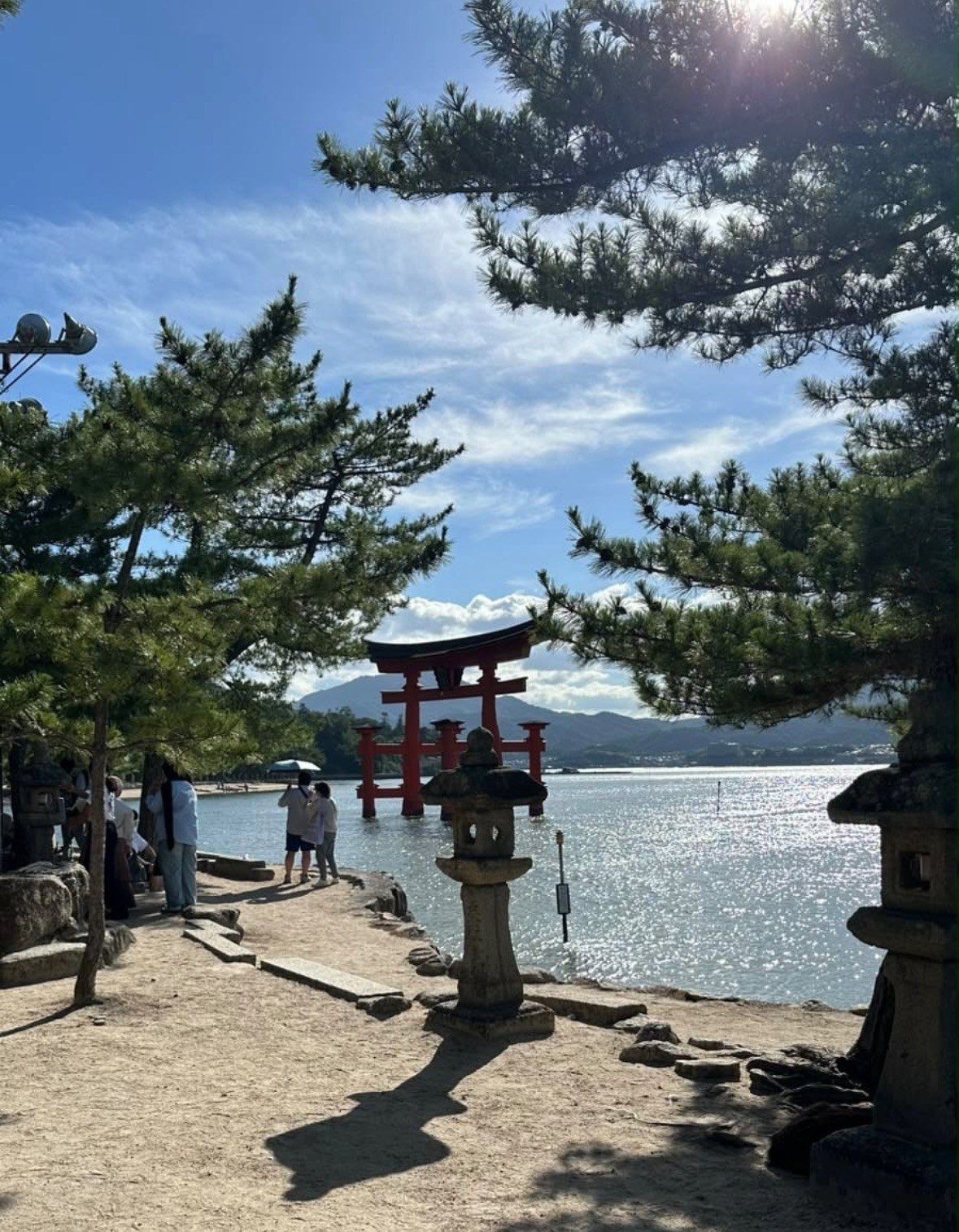
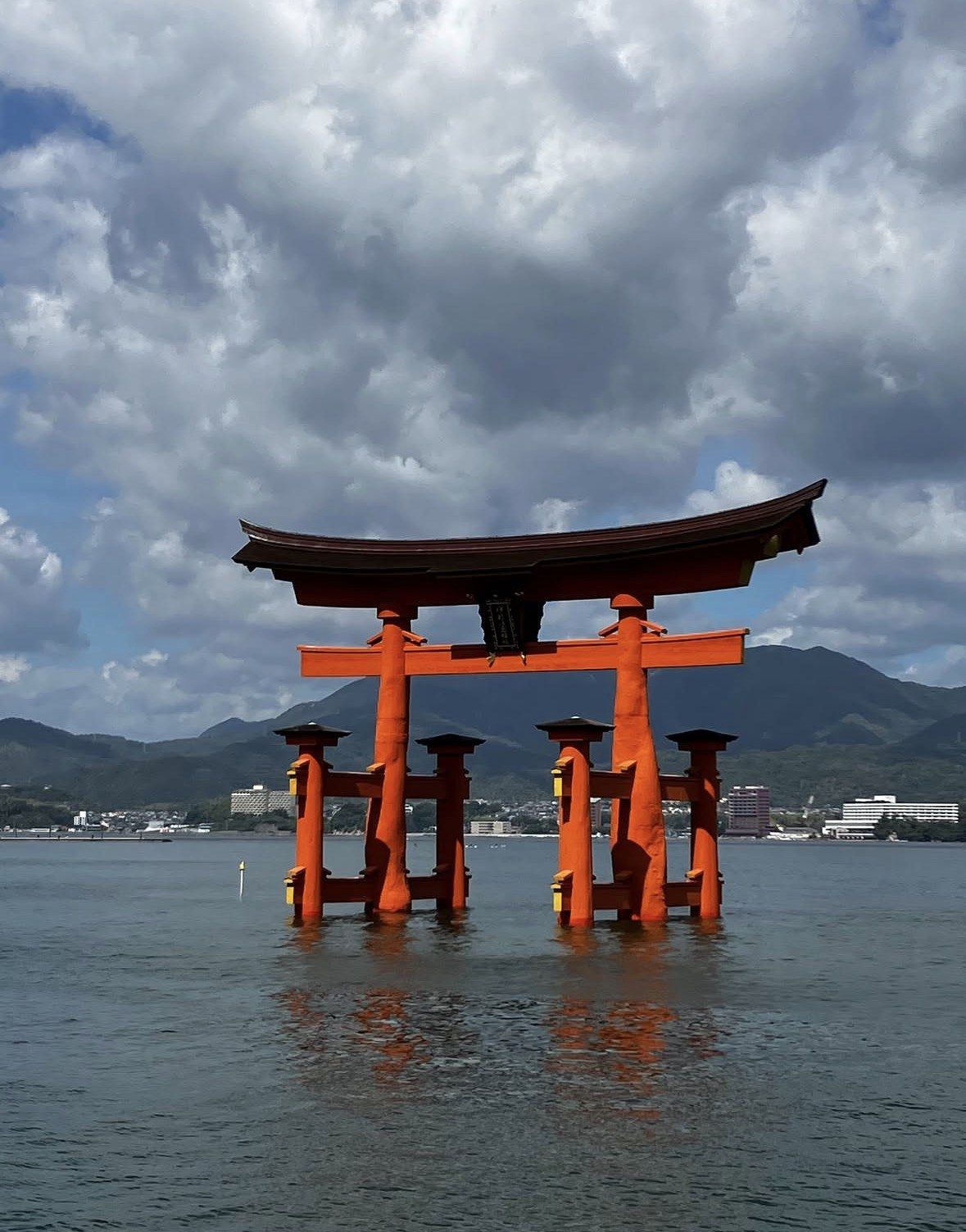
That is the whole reason the shrine appears to float. At high water the sea comes in under the corridors and the buildings read as if moored; at low water you look down onto wet sand and the pile forest holding the place up. The version in most people's photographs is the high-water one, so work out which of the two your hours on the island will actually give you.
Miyajima tide times and the floating torii gate
What the water will be doing on your date is published in advance: the Miyajima Tourist Association keeps a tide page updated day by day. It gives the times when the shrine looks as if it is floating and, separately, the times when you can walk out across the flat to the Great Torii. The page lists windows, not water heights, so read it as a clock for your day.
Two things surprise people. First, the two windows are not the same thing and cannot both be had at once. Second, on many days there is no torii-walk window at all, which means a visit timed badly leaves you with the gate out of reach and the corridors over bare sand. Check the tide table before you fix the island half of your day, and aim to be on Miyajima across a tide change so you see the water come in or go out.
A fixed-departure coach day cannot promise either view, and no honest page will tell you otherwise. What a guided day does fix is everything else: the ferry leg, the entry at the shrine and the walk from the pier, so the only variable left is the tide. If you are watching the tide table and it lands awkwardly for your dates, choose the option whose schedule still gets you to the shrine inside its own opening hours.
- Floating view and torii walk are published as separate windows on the official daily tide page
- Some days have no window for walking to the torii
- Mid-day departures from Miyajima-guchi run roughly every 15 minutes, with gaps of 20 to 30 minutes early and late
- Check the tide for your date before locking in a departure time
One bus day, the ferry and the shrine included
If the tide table is the only thing you want to be thinking about on the day, this 8-hour day carries the round-trip ferry and the admissions for Itsukushima Shrine, Miyajima Island and the Peace Memorial Museum.
★ 5.0/5 · 9,528 reviews
Opening and closing times through the year
Opening is steady at 6:30am; it is the closing time that moves with the calendar, and the official admission page sets it out by date range. The longest season runs from 1 March to 14 October, when the shrine stays open until 6:00pm. Autumn colour, which normally arrives around 22 November for Japanese maple, falls inside the shorter afternoon, so the light goes while the gate is already closing.
Admission is handled at the entrance in the usual categories: adults, high school students, and elementary and junior high students. A combined ticket covers both the shrine and the Treasure Hall, and the official site states that it is issued at the Itsukushima Shrine entrance only. Sort it out on the way in if the Treasure Hall is part of your plan.
The Treasure Hall and Senjokaku keep one set of hours all year, so they close well before the shrine does in summer and matter most as a late-morning or early-afternoon stop.
| Dates | Opens | Closes |
|---|
| 1 March - 14 October | 6:30am | 6:00pm |
|---|
| 15 October - 30 November | 6:30am | 5:30pm |
|---|
| December | 6:30am | 5:00pm |
|---|
| 4 January - end of February | 6:30am | 5:30pm |
|---|
| Treasure Hall, all year | 8:00am | 5:00pm |
|---|
| Senjokaku (Hokoku Shrine), all year | 8:30am | 4:30pm |
|---|
The pagoda, Daisho-in and the street back to the pier
Three stops sit close enough to the shrine that you can take them in the same visit without rearranging anything. The five-storey pagoda stands on the rise immediately beside Senjokaku, so the two work as one short detour from the shrine exit; Senjokaku shuts at 4:30pm, earlier than the shrine, which is the hour to work back from.
Daisho-in is uphill, inland from the shrine, and it is also the trailhead for one of the three official routes to the Mt. Misen summit, listed at two hours. You do not need to commit to the climb to visit the temple, but if Misen is on your list, know that uphill ropeway service stops at 16:00 with the last car down at 16:30.
The shopping street between the ferry pier and the shrine approach is where the island's food is, and it is also the reason an island afternoon stretches longer than planned. Near Miyajima-guchi on the mainland side, anago-meshi, grilled conger eel over rice cooked in eel-head stock, is the local dish most associated with the crossing; waits can reach an hour in summer and at weekends.
Timing it yourself or taking a guided day
Hiroshima prefecture's own one-day model course gives Itsukushima Shrine 60 minutes and adds up to about 220 minutes of stops across the city and the island, which is why the full-day guided options on this site run 8 hours or a little more. The crossing from Miyajima-guchi takes about 10 minutes, so the pressure in the day comes from the stops on land and the shrine's closing hour rather than the boat.
Timing an independent visit works if you have already read the tide table for your date and are happy to build the day around it. If you would rather have the ferry, the entry and the sequencing handled, the tours below do that, and each of them puts you at the shrine inside its own opening hours.
Peaceful Hiroshima & Miyajima UNESCO 1 Day Bus Tour carries the shrine entry inside a single 8-hour day, from 19,488 yen, 5.0 ★ (9,528 reviews): admissions for Itsukushima Shrine, Miyajima Island and the Peace Memorial Museum, the round-trip ferry, an air-conditioned vehicle, an English-speaking local guide, multilingual audio in the bus in EN, FR, ES, IT, DE, PT and UA, and lunch if you select it. Assembly is 10:00am at Hiroshima station, 2F Shinkansen ticket gate, North Gate, 2-37 Matsubaracho, Minami-ku; look for the staff holding a green and white flag.
- Hiroshima & Miyajima Guided tour with Itsukushima Shrine & Ferry: entrance to Itsukushima Shrine plus round-trip bus and ferry and a bilingual guide in English and Spanish, 8 hours, from JPY 7127, 4.9 ★ (740 reviews); join it either at Hiroden-Miyajimaguchi Station on the mainland side or at the Shinkansenguchi Hiroba bus berth outside Hiroshima Station, between stops 8 and 9
- Hiroshima and Miyajima Full Day Bus Tour from Hiroshima: 8 hours 20 minutes, from 25,000 yen, 4.6 ★ (520 reviews), with a national government licensed English guide interpreter, the Miyajima visitor tax and other admissions and transport; meets at Hotel Granvia Hiroshima 1F lobby on the north, Shinkansen Plaza side of the station
- Hiroshima & Miyajima 1-Day Tour from Osaka, Kyoto or Hiroshima: shrine and museum entry, the Miyajima ferry and an English guide in one bus day of 8 to 12 hours, from 17,000 yen, 4.9 ★ (279 reviews)
Questions people ask
Is the shrine open on 1 January?
Yes, and on unusual hours. For New Year worship the shrine is open from midnight on 1 January until 6:30pm. Normal seasonal hours resume from 4 January, when closing is 5:30pm through the end of February.
How often do boats cross to Miyajima, and how late can I stay?
Boats from Miyajima-guchi need about 10 minutes; through the middle of the day one leaves roughly every 15 minutes, thinning to one every 20 to 30 minutes at the start and the end of service. On the regular timetable the last sailing back from the island runs in the 22:00 hour, around 22:14. If you are staying for the evening, check the last tram or train back from Miyajima-guchi as well. A Miyajima visitor tax is collected separately when you enter the island; several of the tours on this site include it.
Can I see the Treasure Hall on the same visit?
Yes. The Treasure Hall opens 8:00am to 5:00pm all year, which is later than the shrine opens and earlier than it closes in the long season. A combined shrine and Treasure Hall ticket exists, and the official site states it is issued at the Itsukushima Shrine entrance only.
Should I add Mt. Misen after the shrine?
Only if you are on the island by early afternoon. Uphill cars stop at 16:00 and the last descent is 16:30. The ride splits in two: 8-person cabins on the Momijidani line leave at one-minute intervals and take 10 minutes, then the Shishiiwa line's 35-person cars run every 5 to 15 minutes for another 4. From the summit observatory it is about a kilometre on foot back to the ropeway station. Periodic inspection closes the whole line at announced intervals, and high wind, thunder or a power failure can halt it too, so read the operator's notices on the morning itself.
When is the shrine quietest?
Early, at the 6:30am opening, before the first day-trip groups land, and again in the last hour before closing once the scheduled coaches have left. Closing is the constraint in autumn and winter: 5:30pm from 15 October to 30 November, 5:00pm through December.
Read also