In shortOrder okonomiyaki first, and expect it stacked instead of stirred: the cook lays down a thin crepe, then cabbage, then meat or seafood, then fried noodles and an egg, a method credited to Mitchan Sohonten. Then grilled oysters, which this prefecture produces more of than any other, tsukemen, anago-meshi near Miyajima-guchi, island lemon and sake from Saijo. Eat at counters in Nagarekawa, Hondori, Ekinishi or Yokogawa.
3 hoursizakaya night tour length
from 13,500 yenizakaya food and drink tour
4.9 ★ (355 reviews)night tour rating
35 to 40 minutesHiroshima Station to Saijo
How Hiroshima okonomiyaki is built on the griddle
The local version is assembled in layers on the hot plate. A thin crepe of batter goes down first, then a heap of cabbage, then meat or seafood, then a nest of fried noodles, and an egg underneath the whole stack before it is flipped and sauced. The style is credited to Mitchan Sohonten. In the Kansai version the batter and cabbage are stirred together in a bowl and cooked as one thick disc, so what you get there is a single mixed pancake with no separate layers.
Cooking happens on a long iron teppan with the cook standing on the other side of it, which is why almost every okonomiyaki room in Hiroshima is counter seating. Your finished okonomiyaki is usually pushed across the hot surface to the strip of griddle in front of your seat, where it stays warm while you eat. The tool is a small metal spatula: press down, cut off a bite-sized piece, lift it straight to your mouth. Chopsticks and a plate are offered if you prefer them, and nobody minds which you use.
Ordering is a short conversation. Pick the protein, pork being the standard, squid, prawn or cheese the usual additions, and say whether you want the noodle layer made with soba or udon. Udon is softer and heavier; soba crisps at the edges on the griddle. Extra egg is a normal request. Portions are built to one per person, so order individually rather than sharing one between two.
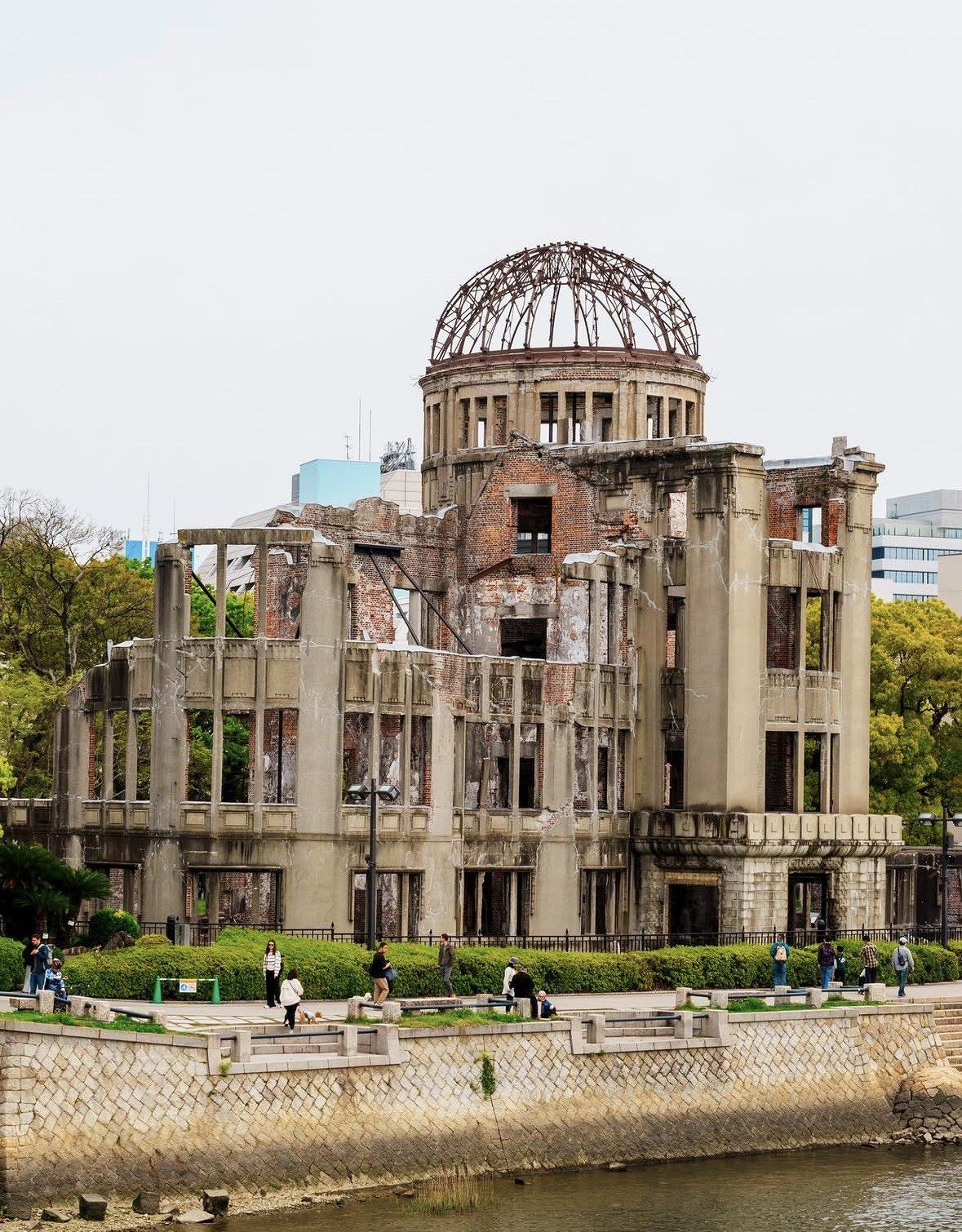
Finding a griddle is easy in the centre. Nagarekawa is packed with izakaya, ryotei, bars and well-known okonomiyaki restaurants, and there are multi-storey buildings in the city centre where small okonomiyaki stalls sit stacked floor above floor, each with its own counter and its own regulars. If your day is spent in the park, the ground floor of Orizuru Tower holds a cafe and an okonomiyaki restaurant, about one minute on foot from the Genbaku Dome-mae tram stop at 1-2-1 Ootemachi.
An evening of okonomiyaki and izakaya plates
Three hours with a certified guide, 3 drinks chosen from the menu, 2 food plates and an okonomiyaki plate, which is the fastest way to eat the layered local version without picking a building at random.
★ 4.9/5 · 355 reviews
What to eat in Hiroshima after the okonomiyaki
Oysters are the second reason people come here to eat. Hiroshima has the highest oyster production of any Japanese prefecture, and the local ones are small, slightly sweet and low in liquid, which is exactly why they take so well to grilling rather than being drowned in sauce. They are a standard item on izakaya and teppanyaki menus, so you do not need a specialist restaurant: grilled in the shell on the iron plate is the version to order first, with the deep-fried kaki-fry as the backup if the counter is busy. No official prefectural page publishes a season window, so ask what is on the counter that evening instead of trusting a date you read somewhere.
Tsukemen is the local noodle dish that visitors miss. Cold wheat noodles arrive with raw cabbage and other vegetables and a separate bowl of chilli and sesame dipping sauce, and you dip each mouthful rather than eating the noodles in soup. Heat levels are usually ordered by number, so start low. The other noodles you will meet are the fried ones inside your okonomiyaki, which is the same product doing a different job.
Anago-meshi is a day-trip dish. Grilled conger eel is laid over rice cooked in stock made from the eel heads, and the dish is associated with Ueno near Miyajima-guchi station, where waits can reach an hour in summer and at weekends. Either eat it before you take the boat across to Miyajima, in which case go early, or make it the last thing you do on the way back and accept the queue.
Two island and valley products round out the list. Lemons from the Setouchi islands show up all over Hiroshima as peel in sweets, as juice in dressings and in sour drinks at izakaya counters, and they travel well as something to take home. For sake, Saijo is the brewing quarter: ten breweries, most of them clustered on Sake Brewery Street, a short walk from JR Saijo Station, which the local tourism body puts 35 to 40 minutes from JR Hiroshima Station on the Sanyo Main Line. If you are not making the trip out, Saijo labels turn up on city izakaya lists, so ask for a local one by name rather than taking the house pour.
- Okonomiyaki, Hiroshima style: layered crepe, cabbage, meat or seafood, fried noodles, egg
- Oysters, grilled in the shell on the teppan, an izakaya and teppanyaki standard
- Tsukemen: cold noodles with a chilli and sesame dipping sauce, ordered by heat level
- Anago-meshi: conger eel grilled and set on rice simmered in stock from the eel heads, eaten out towards Miyajima-guchi
- Setouchi lemon in sweets, dressings and sour drinks
- Sake from Saijo, ten breweries mostly on Sake Brewery Street
Districts to aim for after dark
Nagarekawa is the biggest concentration and the simplest to reach: it is one of Hiroshima's largest entertainment districts, thick with izakaya, ryotei, bars and okonomiyaki restaurants, and it sits directly at the Ebisucho and Hatchobori tram stops. Walk in without a plan and work the ground floors and the lift buttons, because many of the rooms are on upper storeys with only a small sign at street level.
The other three areas have different characters. Hondori is the arcade side of the same quarter and works for an early dinner before the bars fill. Ekinishi, on the west side of JR Hiroshima Station, is set in renovated Showa-era buildings and is the obvious choice on an arrival or departure night. Near JR Yokogawa Station there is a retro bar district, reached on tram routes 7 and 8, which both start at Yokogawa Station.
On Hiroden trams no tickets are sold and you pay as you get off, which catches people out when they are hurrying back after dinner. The tram day runs late: route 2 still leaves the Hiroshima Station stop as late as 23:09, so a long evening in Nagarekawa does not have to end in a taxi.
| Area | Where it is | What is there |
|---|
| Nagarekawa | Ebisucho or Hatchobori tram stops | One of the largest entertainment districts: izakaya, ryotei, bars, well-known okonomiyaki restaurants |
|---|
| Hondori | City-centre arcades beside Nagarekawa | Listed among the city's drinking areas, good for an earlier dinner |
|---|
| Ekinishi | West side of JR Hiroshima Station | Small bars and eating places in renovated Showa-era buildings |
|---|
| Yokogawa | Near JR Yokogawa Station, tram routes 7 and 8 | Retro bar district |
|---|
| Peace Park edge | 1-2-1 Ootemachi, a minute from Genbaku Dome-mae | Orizuru Tower ground floor: cafe and an okonomiyaki restaurant |
|---|
What the counters are actually like
Expect to sit at a counter, often with six to a dozen seats and the griddle or the cook's hands right in front of you. Groups larger than four are awkward in the smallest okonomiyaki rooms, and you may be split along the counter rather than seated together. The air is warm and smells of sauce and oil, so leave the good coat at the hotel.
Language is manageable but not guaranteed. Photo menus, plastic models in the window and pointing all work, and the names worth having ready are buta (pork), ika (squid), kaki (oyster), soba, udon and nama biiru for a draught beer. Written English menus are more common in the big central buildings than in a six-seat place down a Nagarekawa side lane, which is also where the cooking tends to be most interesting.
If you would rather be taken than translate, the 3-hour Hiroshima Izakaya Food and Drink Night Tour exists for exactly that: a certified guide, 3 drinks chosen from the menu, 2 food plates and an okonomiyaki plate, so the layered version gets eaten properly on an evening when you are not reading signs. It starts from 13,500 yen and is rated 4.9 ★ (355 reviews), meeting outside the Hiroshima Fukuya department store in front of the GUCCI display, where the guide holds an orange sign.
Dates and weather that change your evening
Two festivals put the food outdoors. Toukasan takes over the Chuo-dori area for three days from the first Friday of June, together with the Yukata de Kinsai festival: it is the summer festival of Enryu-ji temple in Mikawa-cho, and it is the point in the year when Hiroshima starts wearing yukata. Ebisu Taisai, one of the city's three big festivals, falls on 18, 19 and 20 November at Ebisu Shrine in Ebisucho, Naka-ku, and Chuo-dori is pedestrianised on the evening of the 19th from 19:15 to 22:00. Both evenings fill the restaurants early.
Heat and rain matter more than you would think in a city where the cooking surface is at your elbow. August averages a daily high of 32.8C with lows around 25.1C, which makes a griddle counter hard work at 19:00; eat late or pick a room with the air conditioning on the diner's side. Rain follows a known calendar: the regional rainy season normally starts around 6 June and finishes around 19 July, and July tops the year's rainfall at 279.8 mm, so inside that window choose a counter under a covered arcade or inside one of the multi-storey okonomiyaki buildings.
November is the easiest month for a food evening: October averages a daily high of 23.7C, Japanese maple colours around 22 November and the Ebisu Taisai dates land in the same week, so an afternoon of sightseeing and a long dinner fit into one day without anyone wilting.
Questions people ask
Do I eat okonomiyaki with a spatula or chopsticks?
Either. At the counter the small metal spatula is normal: press down to cut a bite, then lift it straight from the griddle. Ask for chopsticks and a plate if you would rather not eat off the hot surface, which is also easier with children.
Does the izakaya night tour include okonomiyaki?
Yes. The Hiroshima Izakaya Food and Drink Night Tour includes 2 food plates and an okonomiyaki plate, plus 3 drinks you choose from the menu, a certified guide and photos during the tour. It runs 3 hours, from 13,500 yen, and is rated 4.9 ★ (355 reviews).
Where can I eat near Peace Memorial Park?
For food, Orizuru Tower is the closest reliable stop: a cafe and an okonomiyaki restaurant share its ground floor with a souvenir shop, at 1-2-1 Ootemachi, a minute's walk from the Genbaku Dome-mae tram stop. If you want the viewpoint with the meal, the observation deck runs 10:00 to 18:00 and stops admitting visitors 30 minutes before it closes.
Is there a daytime tour that includes a meal?
Lunch comes with the Hiroshima Peace (Heiwa) Walking Tour at World Heritage Sites, 5 hours on foot with a certified guide and entrance to the Peace Memorial Museum and Orizuru Tower, from 13,600 yen, 5.0 ★ (1,052 reviews). The group forms up by the mont-bell store a minute from Nishi Kamiyacho, and the cut-off is strict: arrive more than 15 minutes after the meeting time and you cannot join.
Can I drink Hiroshima sake without going to Saijo?
Yes, local labels turn up on izakaya lists in Nagarekawa and Ekinishi, so name a Saijo brewery rather than taking the house pour. If you want the breweries themselves, the quarter is a short walk from JR Saijo Station, which the local tourism body puts 35 to 40 minutes from JR Hiroshima Station on the Sanyo Main Line, with ten breweries mostly clustered on Sake Brewery Street.
Read also