In shortCount the stop times the prefecture itself publishes and the day is already spoken for: 30 minutes at the Atomic Bomb Dome, 60 inside the Peace Memorial Museum, a 45-minute boat leg and 60 at Itsukushima Shrine, which is about 220 minutes before you move between any of them. Start in the park at the museum's 7:30am opening, then cross to Miyajima and stay on the island until the shrine closes.
7:30amMuseum doors open
220 minutesStops in the model course
about 10 minutesMiyajima-guchi ferry crossing
16:30Last ropeway descent
What a Hiroshima 1 day itinerary has to fit
A day here is tighter than the map suggests. The prefectural tourism board's one-day course for the two World Heritage sites budgets 30 minutes at the Atomic Bomb Dome, 60 inside the Peace Memorial Museum, 45 minutes on the water and 60 at Itsukushima Shrine, about 220 minutes standing still. Moving between those stops is extra time on top, and that is where most one-day plans come apart.
Three transfers sit inside the day. The opening leg is the tram from Hiroshima Station to Genbaku Dome-mae, about 25 minutes, with roughly a 10-minute walk at the far end; streetcar line 1 or bus 24 to Hon-dori is about 20 minutes and drops you five minutes' walk from the park. Route 2 then runs from the park area out to Hiroden-Miyajimaguchi with no change of tram, and this is the loosest block of the day, since no official travel time is published for the full run. The ferry itself is the short part, about 10 minutes; what you plan around is the gap between sailings, roughly every 15 minutes through the middle of the day and 20 to 30 minutes at the start and end of the timetable. Pay as you get off the tram, because no tickets are sold on board.
The 45 minutes the model course spends afloat is the direct boat from the Motoyasu Bridge pier beside the park, which lands on Miyajima with no land leg at all. Take it once, outbound, if the river view matters to you. On a tight day, use the short crossing from Miyajima-guchi and give the difference to the museum or to the island.
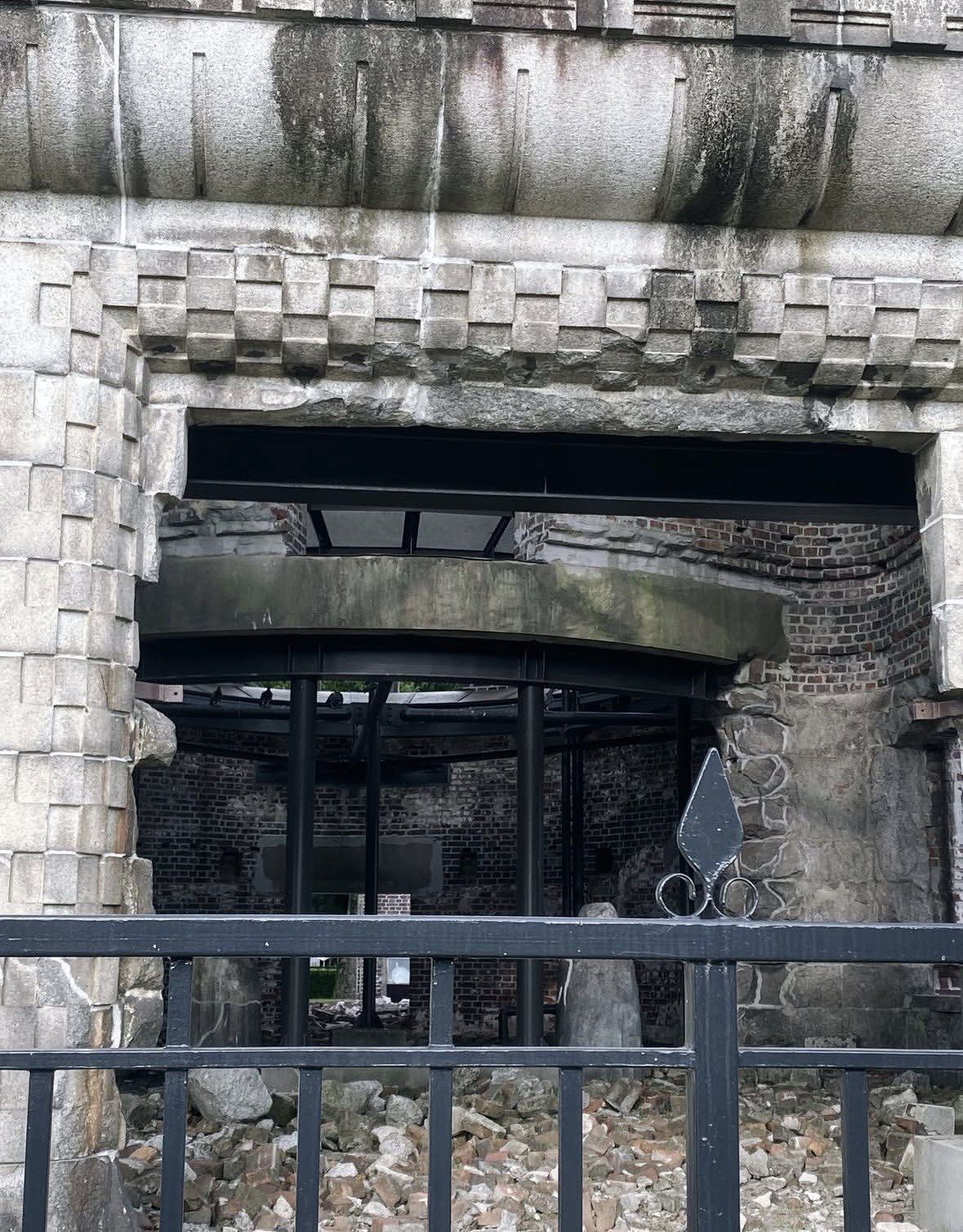
- Atomic Bomb Dome: 30 minutes in the model course, inscribed on the World Heritage List on 5 December 1996
- Peace Memorial Museum: 60 minutes, which is short for this building
- Boat crossing: 45 minutes in the model course, or about 10 minutes from Miyajima-guchi
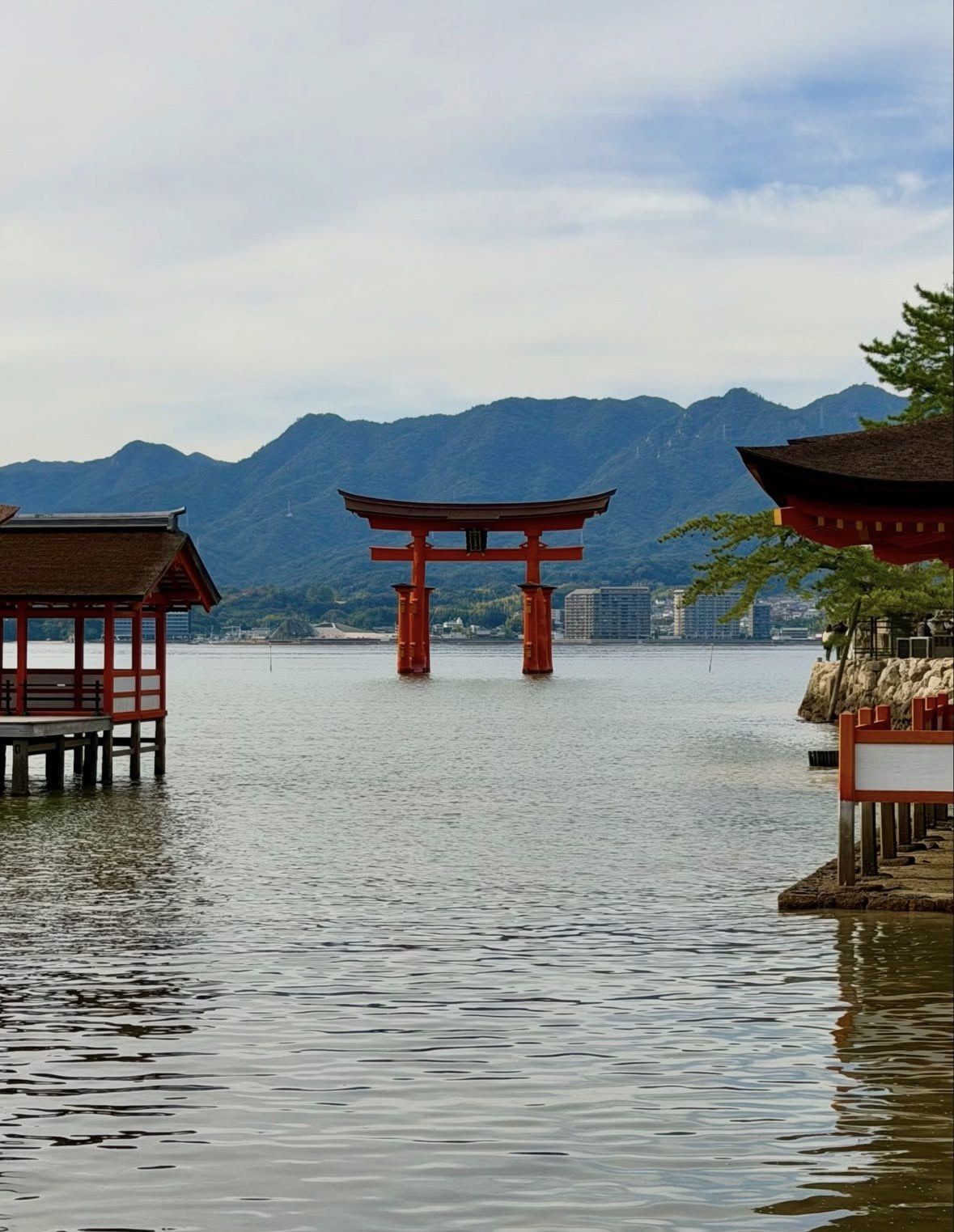
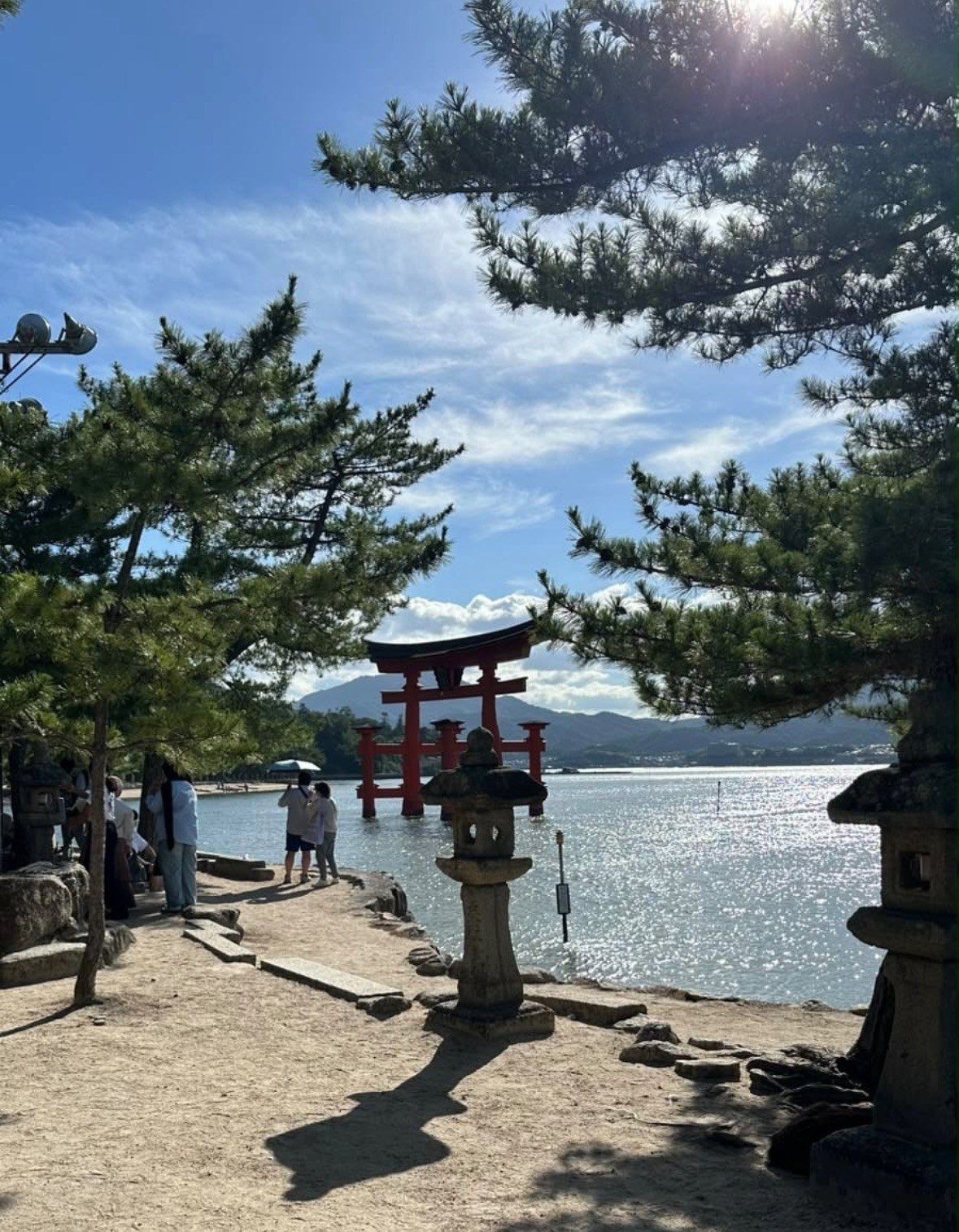
- Itsukushima Shrine: 60 minutes, founding dated to 593 and rebuilt in shinden-zukuri style in 1168
- Then the tram legs, the walk across the park and the wait for a boat
Park in the morning, Miyajima after lunch
Park first is the stronger default from March to mid-October, for one reason: the museum's doors open at 7:30am. That first hour is the only part of the day when you can take the permanent exhibition at your own pace, and entry during the early-morning and late-evening extension windows requires an online reservation, so turning up at 7:30 without one does not work.
The park itself was laid out as one composition: approximately 122,100 square metres, opened on 1 April 1954, the work of three architects including Kenzo Tange, whose scheme came first out of 145 competition entries. Walking it is the transfer between the museum and the Dome, so in practice the 30 minutes the model course gives the Dome also swallows the cenotaph and the National Peace Memorial Hall. The Hall opens at 8:30am and shuts before the museum does, at 6:00pm March to November, 7:00pm in August and 5:00pm December to February, which is why it belongs in the morning rather than saved for later.
Leave the park in the late morning and the island gets the afternoon and the end of the day, by which time the coach groups are heading back to the mainland.
| Time | Stop or transfer | What fixes it |
|---|
| 7:30 | Peace Memorial Museum, permanent exhibition | Doors at 7:30am, the early-morning window needs an online reservation, and the model course allows 60 minutes |
|---|
| From 8:30 | National Peace Memorial Hall | 8:30am start; shuts at 6:00pm March to November, at 7:00pm in August and at 5:00pm December to February |
|---|
| Mid-morning | Atomic Bomb Dome and the park walk | 30 minutes in the model course, and Orizuru Tower sits about a minute from the Genbaku Dome-mae tram stop, opening at 10:00 |
|---|
| Late morning | Route 2 tram to Hiroden-Miyajimaguchi, then the ferry | No change of tram, about 10 minutes on the water, boats roughly every 15 minutes mid-day |
|---|
| Early afternoon | Itsukushima Shrine | 60 minutes in the model course, open from 6:30am, a national treasure registered as World Heritage in 1996 |
|---|
| Afternoon | Treasure Hall and Senjokaku | Treasure Hall 8:00 to 17:00 all year, Senjokaku 8:30 to 16:30 all year |
|---|
| Before 16:00 | Mt. Misen ropeway, optional | Uphill cars run 9:00 to 16:00, last descent 16:30, shuttle to Momijidani station from 9:50 about every 20 minutes |
|---|
| Until closing | The shrine and the shoreline | The gate shuts at 6:00pm between 1 March and 14 October, at 5:30pm from 15 October to 30 November, and at 5:00pm for the whole of December |
|---|
| Evening | Back to the city | Boats off the island run into the 22:00 hour, the last around 22:14; check the last tram or train back from Miyajima-guchi before you stay late |
|---|
Miyajima first, the park in the afternoon
Island first is the better order from 15 October onward. The shrine drops to a 5:30pm close between 15 October and 30 November, and to 5:00pm for all of December, so an afternoon arrival in those seasons leaves you an hour or two of usable light on the island. Put the crossing at the start instead and let the museum absorb the end of the day: it stays open to 7:00pm from March to July and again September to November, and to 6:00pm from December to February.
Set the alarm for the water. The shrine itself opens at 6:30am all year, ferry gaps run 20 to 30 minutes at the early end of the timetable, the Treasure Hall opens at 8:00 and Senjokaku at 8:30. Being on the island by 9:00 gets you the ropeway's first uphill cars and a shrine that has not yet taken the first big boats, and it puts Mt. Misen behind you before lunch rather than against the 16:00 cut-off.
Cross back in the early afternoon and work the park in reverse: the National Peace Memorial Hall first, because it closes earliest, then the Dome, then the museum last. Anyone counting on the museum's evening extension window needs to reserve the permanent exhibition online before the day starts. August buys you more room at the end: closing moves to 8:00pm, and on the 5th and 6th to 9:00pm.
Let the season choose for you. March to mid-October, run the park first and finish on the island at 6:00pm. From mid-October through February, run the island first. The 10:00am bus day from Hiroshima Station follows the park-first pattern, with the museum in the morning and the ferry after it, which is one reason a 10:00am start still works on a guided day but not on a self-planned one built around the 7:30 doors.
Start the day on Miyajima
Eight hours with round-trip bus and ferry, entrance to Itsukushima Shrine and a bilingual guide in English and Spanish, with Miyajima in the morning and Peace Memorial Park in the afternoon: from JPY 7127, 4.9 ★ (740 reviews).
★ 4.9/5 · 740 reviews
Pinch points when you do Hiroshima and Miyajima in one day
The tide decides what Miyajima looks like, far more than the hour you arrive. Windows are published a day at a time by the Miyajima Tourist Association: one set for the hours the shrine stands over water, a separate set for the hours you can walk out to the Great Torii, and plenty of dates carry no walk window whatsoever. Look your date up before anything else is locked in, including any departure time you cannot shift.
The ropeway is the first thing that breaks. Cars carry you up only between 9:00 and 16:00, the last one down leaves at 16:30, and the upper Shishiiwa line runs at 5 to 15 minute intervals, so a queue at the bottom matters. The operator also closes the line entirely for periodic inspection at announced intervals, and suspends it for high wind, thunder or power failure. Check its notices for your date rather than assuming it is running.
Seasonal closing times tighten the afternoon exactly when the island looks best. Japanese maple normally colours around 22 November, by which point the shrine is already on its 5:30pm close and the light goes early. Two museum dates are worth avoiding outright: it closes on 30 and 31 December, and for a few days in mid-February for an exhibition changeover.
- Tide windows: published daily by the tourist association, with some days offering no walk to the torii
- Ropeway: uphill 9:00 to 16:00, last descent 16:30, plus inspection and weather shutdowns
- Shrine closing: 6:00pm 1 March to 14 October, 5:30pm 15 October to 30 November and 4 January to end of February, 5:00pm in December
- Dates the museum is shut: 30 and 31 December, plus several days in mid-February for an exhibition change
- Sailings: roughly a quarter-hour apart through the middle of the day, stretching to 20 to 30 minutes at either end of the timetable
Where the castle and Shukkeien fit if you drop the island
Dropping Miyajima buys you the whole afternoon in the city, and the obvious use of it is the castle quarter and the garden. Plan the castle for the outside only, because its main keep has been shut since March 2026, closed on safety grounds after concrete deterioration and ageing building services. You can still look at the tower from the grounds, the rebuilt Ninomaru buildings take visitors from 9:00 until 17:30 between April and September and until 16:30 between October and March, with the gate closing to new arrivals 30 minutes before that, and after sunset the keep and Ninomaru stay lit until 22:00.
Shukkeien takes the rest of the afternoon. Work on it began in 1620, as the villa garden of the lord Asano Nagaakira, with his chief retainer and tea master Ueda Soko drawing the design. Gates open at 9:00 and close at 18:00 from 16 March to 15 September, at 17:00 from 16 September to 15 March, with the last entry 30 minutes before closing. The Prefectural Art Museum shares the same tram stop and keeps 9:00 to 17:00 hours, admitting visitors until half an hour before it closes. Getting there means platform 1, 2 or 6 at the station's south exit A, then a change at Hatchobori onto the Hakushima Line as far as Shukkeien-mae.
A sightseeing loop bus from the Shinkansen exit of Hiroshima Station strings these stops into one ride, running daily from 9:00 to 18:00 with 10 to 15 minutes between departures, calling in this order: the Prefectural Art Museum, Hiroshima Castle, the Hiroshima Museum of Art, Genbaku Dome-mae, Heiwa Koen-mae, Namiki-dori Iriguchi. Its 9:00 start is later than the museum's, so do the park on foot first and pick the bus up afterwards. At the Hiroshima Museum of Art the last admission is 16:30, and Mondays are closed except when a special exhibition is on.
Matching each order to a guided full day
A guided day takes the two slowest decisions off you: which tram platform, and which pier. The three full-day options below all run eight hours or a little more, which is the honest length of this itinerary once the transfers are counted.
The Peaceful Hiroshima & Miyajima UNESCO 1 Day Bus Tour runs the park-then-island order, meeting at 10:00am in front of the Shinkansen ticket gate on 2F at Hiroshima Station, North Gate. Its admissions cover the Peace Memorial Museum, Miyajima Island and Itsukushima Shrine, and the round-trip ferry, an English-speaking local guide, bus audio guidance in EN, FR, ES, IT, DE, PT and UA and lunch if you select it come with it. Eight hours in all, from 19,488 yen, rated 5.0 ★ (9,528 reviews).
Starting on the island suits the Hiroshima & Miyajima Guided tour with Itsukushima Shrine & Ferry, whose full day meets outside Hiroshima Station and goes to Miyajima first, leaving Peace Memorial Park for the afternoon; its second meeting point, Hiroden-Miyajimaguchi Station, is for a shorter Miyajima-only option. Round-trip bus, round-trip ferry, entrance to Itsukushima Shrine and a bilingual guide in English and Spanish are included, while food and drinks are not. From JPY 7127, 4.9 ★ (740 reviews).
A lobby start, also with the island first, is the third option. The Hiroshima and Miyajima Full Day Bus Tour from Hiroshima collects guests at Hotel Granvia Hiroshima 1F, on the station's north side by the Shinkansen Plaza, and fills 8 hours 20 minutes with a national government licensed English guide interpreter, admissions, transport and the Miyajima visitor tax. Lunch is not included. Prices start at 25,000 yen, with a 4.6 ★ rating (520 reviews).
- Museum in the morning, island after lunch: Peaceful Hiroshima & Miyajima UNESCO 1 Day Bus Tour, 8 hours, from 19,488 yen, 5.0 ★ (9,528 reviews)
- Island first or a Spanish-speaking guide: Hiroshima & Miyajima Guided tour with Itsukushima Shrine & Ferry, 8 hours, from JPY 7127, 4.9 ★ (740 reviews)
- Most hours on the clock, hotel lobby meeting: Hiroshima and Miyajima Full Day Bus Tour from Hiroshima, 8 hours 20 minutes, from 25,000 yen, 4.6 ★ (520 reviews)
Questions people ask
Is one day in Hiroshima enough for the park and Miyajima?
It is physically possible, because the museum opens at 7:30am and the shrine stays open to 6:00pm from 1 March to 14 October, but the prefecture's own plan already fills about 220 minutes with stops before a single transfer. If something has to go, cut Mt. Misen rather than museum or shrine time. A second night, ideally on the island, gives you the shrine's 6:30am opening and the museum's quiet first hour on separate days.
Can I plan on walking out to the Great Torii?
Not on a fixed schedule. The Miyajima Tourist Association publishes a daily tide table with separate windows for the shrine appearing to float and for approaching the Great Torii on foot, and many days have no walk window at all. Check your date first, then decide which half of the day goes to the island.
How does 6 August change the plan?
Every 6 August the park holds the Peace Memorial Ceremony in front of the cenotaph, from 8:00 to 8:50 a.m., and everything stops for one minute of silence at 8:15 a.m. That takes up the part of the morning the park-first order normally gives to the Dome and the cenotaph. The museum runs late on the 5th and 6th, until 9:00pm, so move the exhibition to the evening and reserve the extension window online.
Does the ropeway take me to the summit of Mt. Misen?
No. You ride two linked lines and then walk: Momijidani sends 8-person cabins up at one-minute intervals on a 10-minute ride, Shishiiwa follows with 35-person cars at 5 to 15 minute intervals for 4 minutes, and the summit observatory sits about a kilometre's walk from the upper station. Walking up from town, the Momijidani, Daisho-in and Omoto trails each take about 1.5 to 2.5 hours, with the Daisho-in course listed at two hours.
Which order works better on a guided coach day?
The park-then-island order, because scheduled departures gather mid-morning rather than at 7:30. The 10:00am bus day from Hiroshima Station's North Gate does the museum and the park, then the ferry and the shrine, which is the park-first order compressed into eight hours. If you want the island early, pick one of the two days that take Miyajima first: the bilingual bus day or the Hotel Granvia Hiroshima lobby day.
Read also