In shortThe Tokyo to Hiroshima shinkansen is the practical choice: a Nozomi runs it in about 3 hours 54 minutes, with Nozomi 5 leaving Tokyo at 06:33 and reaching Hiroshima at 10:27. Flying into Hiroshima Airport adds about 50 minutes on the limousine bus to Hiroshima Station. Book one night in the city at minimum, two if you want Miyajima unhurried.
3 h 54 minTokyo to Hiroshima by Nozomi
06:33Nozomi 5 leaves Tokyo
about 50 minAirport bus to the station
220 minutesStops in the one-day plan
Tokyo to Hiroshima shinkansen: trains, times and stops
Count on about 3 hours 54 minutes in the seat on a Nozomi, with eight stops along the way: Shinagawa, Shin-Yokohama, Nagoya, Kyoto, Shin-Osaka, Shin-Kobe, Okayama and Fukuyama. That figure, rather than any distance in kilometres, is the one your plan hangs on: Hiroshima is a morning's travel from Tokyo and the far end of a long westbound run.
Nozomi 5 is the departure to aim for. It leaves Tokyo at 06:33 and pulls into Hiroshima at 10:27, which is early enough to put the Peace Memorial Park area inside your first day. At the other end of the timetable, Nozomi 89 leaves Tokyo at 20:00 and arrives at 23:54, the last train of the day that reaches Hiroshima. Treat that one as repositioning for the night rather than as travel with any sightseeing attached.
Seat reservations matter on specific dates. Every seat on Nozomi becomes reserved during the peak periods listed for 2026-27 as 21 to 23 November and 25 December to 5 January, so if your trip falls in those windows, sort the seat before you sort anything else.
You arrive at Hiroshima Station, which is where the Hiroden trams begin. Of the services leaving that stop, route 2 is the one that matters for Miyajima, running through to Hiroden-Miyajimaguchi; routes 1 and 5 go the other way toward Hiroshima Port, and route 6 ends at Eba. No tickets are sold on board and you pay as you get off, touching an IC card on both boarding and alighting if you use one.
Tokyo to Hiroshima flight or train, and where the overnight bus fits
Hiroshima Airport takes scheduled flights from Tokyo. Both Tokyo airports appear on the schedule published for 25 October 2026 to 31 January 2027, which also lists Sapporo, Sendai and Okinawa (Naha); Haneda runs through the whole period while Narita is shown only to 21 December 2026. The flying itself is short. The problem is the ground legs at both ends.
From the airport, the limousine bus to the Shinkansen Gate of Hiroshima Station is scheduled at about 50 minutes and uses stop 2 on the airport's first floor, arriving at Platform 5 at the station. There are 46 departures a day back into the station, with airport departures running from 07:20 to 21:55; buses toward the airport leave the station from 05:55 until 19:00. The Hiroshima Bus Center route takes roughly 55 minutes, with about 30 departures between 05:55 and 18:45. Stop 2 also serves Miyajima-guchi, which is useful if the island is your first stop.
Add Haneda access and check-in at the Tokyo end and the flight stops looking faster than a train that runs city centre to city centre and sets you down at the tram stops. Fly if you are connecting from Sapporo, Sendai or Naha, or if your Tokyo base is already near the airport. Otherwise take the shinkansen.
An overnight coach is the third way down. Its advantage is that it uses the night and hands you a full day on arrival; the cost is that you start that day without a hotel night behind you. Check the operator's own arrival time before you commit, because the Peace Memorial Museum's 7:30am opening is only in reach if the coach gets in early enough, and the early-morning window needs an online reservation for the permanent exhibition in any case.
| How you travel | Time on the move | Where it sets you down | What it means for day one |
|---|
| Nozomi shinkansen | about 3 hours 54 minutes | Hiroshima Station, on the Hiroden tram network | Leave at 06:33, arrive 10:27, and the park area is a tram ride away |
|---|
| Flight to Hiroshima Airport plus limousine bus | flight plus about 50 minutes by bus | Platform 5 at the Shinkansen Gate, or Miyajima-guchi from airport stop 2 | Airport access and check-in at the Tokyo end push your start later |
|---|
| Overnight coach | — | Hiroshima city centre in the morning | A full day on arrival, slept sitting up; confirm the arrival time |
|---|
Why a day return from Tokyo does not work
The sightseeing itself is longer than the brochures suggest. The prefectural tourism board's own one-day Hiroshima and Miyajima model course allots 30 minutes at the Atomic Bomb Dome, 60 minutes at the Peace Memorial Museum, a 45-minute boat crossing and 60 minutes at Itsukushima Shrine, about 220 minutes of stops in total, before a single transfer is counted.
Now put nearly eight hours of train around that, close to four each way. The escorted full-day trips that run from Osaka and Kyoto, cities that sit about 1 hour 25 minutes and about 1 hour 40 minutes from Hiroshima by Nozomi, are quoted at 13 hours 10 minutes and 13 hours 20 minutes from meeting point back to base. From Tokyo the rail legs alone are more than twice as long as theirs.
A same-day return from Tokyo therefore buys you the Dome and a rushed museum visit, and nothing on Miyajima worth the crossing. Book a night.
What a 10:27 arrival still gets you
Add roughly 35 minutes to that arrival before you are standing in the park: about 25 minutes on the tram as far as Genbaku Dome-mae, then a walk of about 10 minutes. Streetcar line 1 or bus 24 to Hon-dori takes about 20 minutes plus a five-minute walk, which drops you in the shopping arcades first if you want lunch before the park.
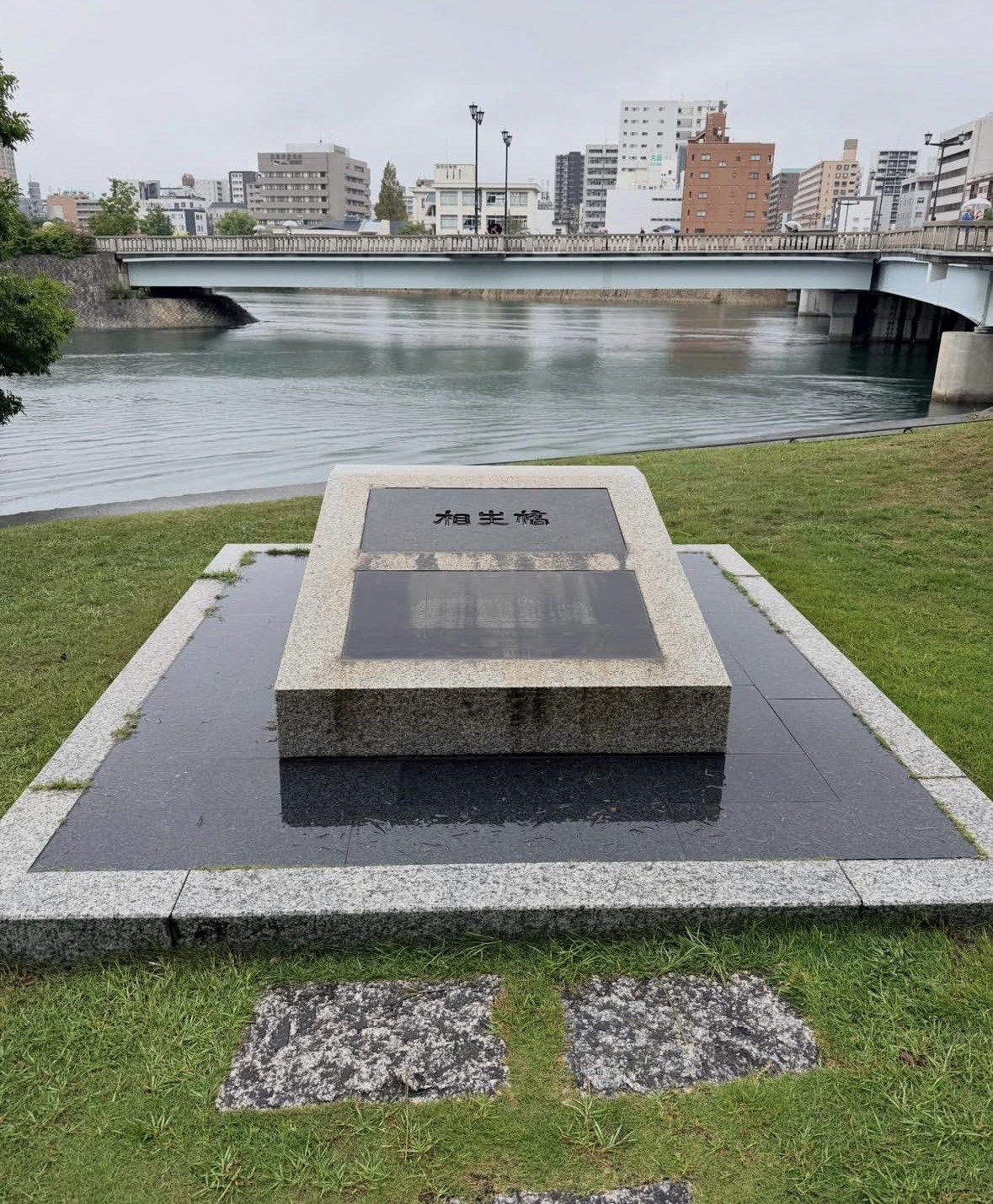
Your first stop at the northern end is the Atomic Bomb Dome, inscribed on the World Heritage List at the committee meeting held in Mérida, Mexico on 5 December 1996. Everything south of it, about 122,100 square metres of planned ground between two rivers, was completed on 1 April 1954 to a design by three architects including Kenzo Tange that was placed first among 145 competition entries. Walking it unhurried is the point of the afternoon.
Museum hours are generous enough to absorb a late start. Closing time is 7:00pm across March to July and again September to November, 8:00pm in August with 9:00pm on the 5th and 6th, and 6:00pm from December to February. The model course gives it an hour; give it longer, which is exactly what an afternoon arrival allows. If you are travelling at the turn of the year, note that it shuts on 30 and 31 December, and it also closes for a few days in mid-February while the exhibition is changed over.
Next door, the National Peace Memorial Hall runs from 8:30am to 6:00pm March to November, to 7:00pm in August and to 5:00pm December to February, and the institution itself recommends public transport, so the tram you arrived on is the right way to it. Orizuru Tower is about a minute on foot from the Genbaku Dome-mae tram stop, with the observation deck and shop running 10:00 to 18:00 and deck admission stopping half an hour before closing; the rooftop viewpoint is called HIROSHIMA HILLS.
Give the evening to food rather than more sights. Nagarekawa is reached directly from the Ebisucho or Hatchobori tram stops, Ekinishi sits in renovated Showa-era buildings just west of the station, and Hiroshima-style okonomiyaki is layered rather than mixed: a thin crepe base, cabbage, meat or seafood, fried noodles and an egg. Local oysters are small and slightly sweet with little liquid in them, so grilling is the usual treatment.
- 10:27 arrival at Hiroshima Station, tram toward Genbaku Dome-mae
- About 11:05 at the Atomic Bomb Dome, which the model plan allows 30 minutes
- Early afternoon in the Peace Memorial Museum, with more than the hour the model plan allows
- Late afternoon at the National Peace Memorial Hall, then Orizuru Tower before its 18:00 closing
- Evening in Nagarekawa or Ekinishi for okonomiyaki and oysters
The guided day after your arrival night
Arriving at 10:27 rules out the 10:00am meeting at the Shinkansen ticket gate, which is precisely why this 8-hour bus day belongs to your second morning: museum, ferry and Itsukushima Shrine in one arrangement.
★ 5.0/5 · 9,528 reviews
One night or two in Hiroshima
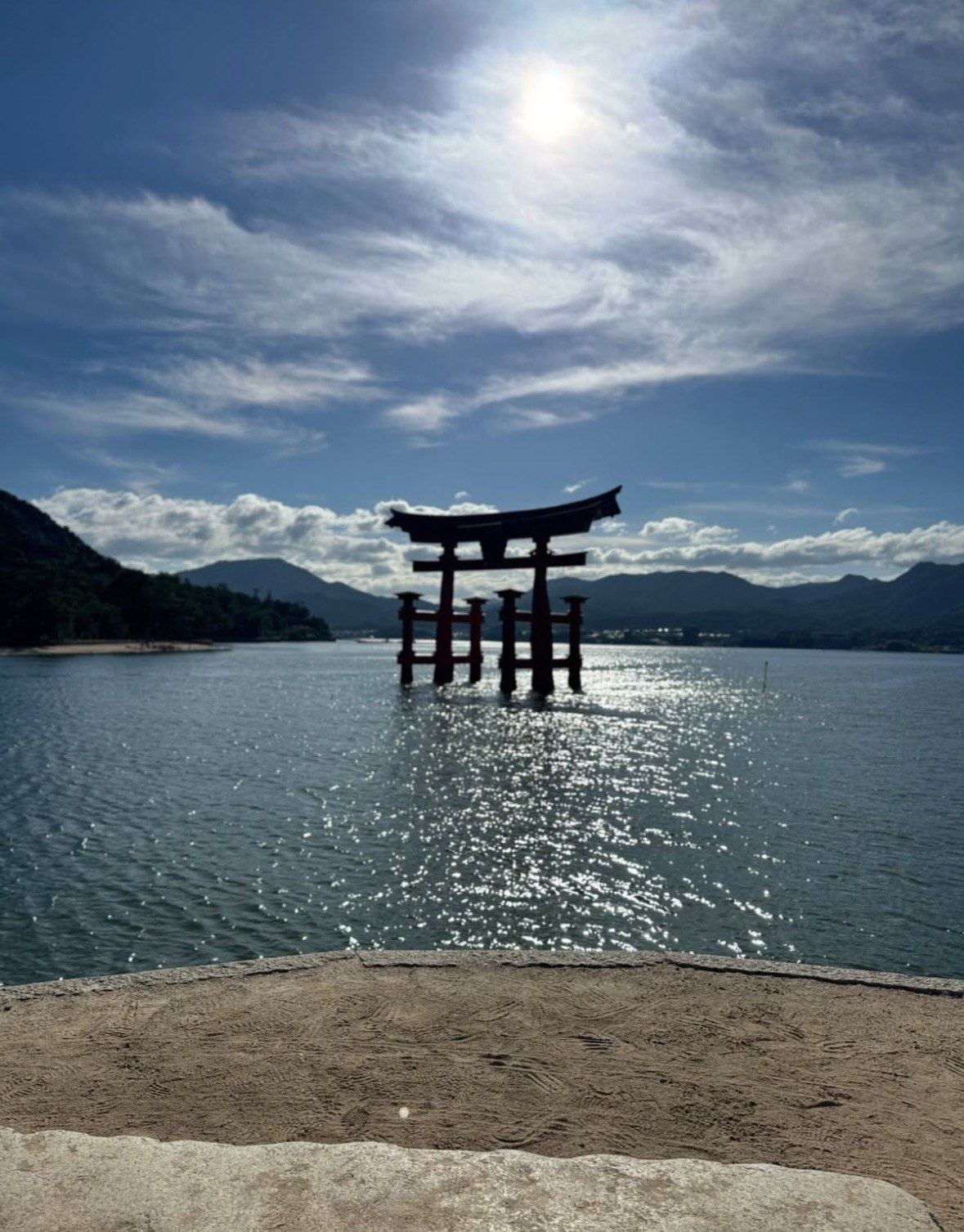
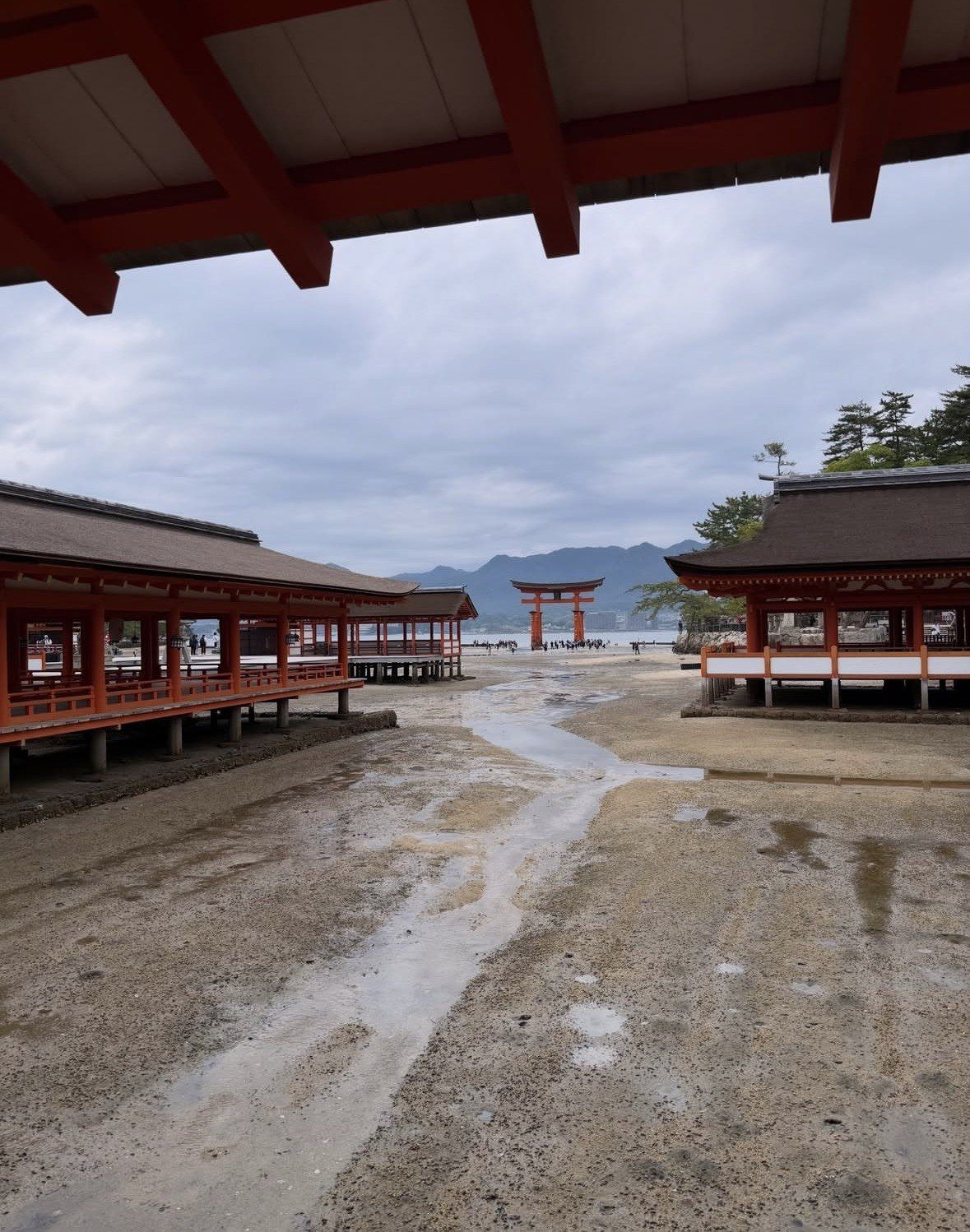
One night is the minimum that makes the trip from Tokyo honest. It gives you the park on arrival afternoon and a complete second day for Miyajima, which is when the island works best: the crossing from Miyajima-guchi takes about 10 minutes, Itsukushima Shrine opens at 6:30am and closes at 6:00pm from 1 March to 14 October, falling back to 5:30pm from 15 October to 30 November and to 5:00pm through December. Note that the station bus day meets at 10:00am, too early for a 10:27 arrival, so keep it for your second morning in the city.
Two nights is the better booking, and the reasons are mechanical rather than sentimental. The tide sets the view, and the Miyajima Tourist Association publishes the day's windows for when the shrine appears to float and when the Great Torii can be reached on foot, with plenty of days carrying no torii-walk window at all. A second day doubles your chances of catching the view you came for. Mt. Misen also needs daylight, since the ropeway runs uphill only from 9:00 to 16:00 with the last descent at 16:30, the summit observatory is about a kilometre's walk beyond the upper station, and the three official trails take about 1.5 to 2.5 hours from town, the Daisho-in course listed at two hours.
A second morning in the city also gets you the museum's 7:30am opening, the quietest hour in the building, as long as you hold the online reservation that the early-morning and late-evening windows require. Spare hours go easily: Hiroshima Castle's reconstructed Ninomaru buildings are open 9:00 to 17:30 from April to September and 9:00 to 16:30 from October to March, with the main keep out of use since March 2026 over deteriorating concrete and ageing building services, and the exterior and Ninomaru both lit from sunset until 22:00. The garden quarter north of the park runs 9:00 to 18:00 between 16 March and 15 September and 9:00 to 17:00 between 16 September and 15 March.
With a third day you can leave the city: Iwakuni is 44 minutes away on the JR conventional line, the sake brewery quarter at Saijo is 35 to 40 minutes on the Sanyo Main Line, and Kure's Yamato Museum opens 9:00 to 18:00 with admission until 17:30 and closes on Tuesdays.
Guided days that fit a short stay
With one full day on the ground, the arithmetic of transfers is what breaks plans: tram to Miyajima-guchi, the boat, the walk to the shrine, then the same in reverse with a shrine closing time pressing on you. A guided full day hands that scheduling to someone else, which is worth more when you have travelled 3 hours 54 minutes to get here and cannot repeat the day.
The 8-hour bus day is the default for a first visit, because it covers both World Heritage sites and carries the widest set of admissions. The budget option runs the same length with a bilingual guide, and the private day replaces the fixed route with sites you pick yourself.
- Peaceful Hiroshima & Miyajima UNESCO 1 Day Bus Tour, 8 hours and the one to give your second morning, from 19,488 yen, 5.0 ★ (9,528 reviews). The 10:00am meeting point is the Shinkansen ticket gate on 2F at Hiroshima station (North Gate), 2-37 Matsubaracho, Minami-ku, where staff hold a green and white flag. Includes an English-speaking local guide, multilingual audio guidance inside the bus (EN, FR, ES, IT, DE, PT, UA), an air-conditioned vehicle, the round-trip ferry, admission for the Hiroshima Peace Memorial Museum, Miyajima Island and Itsukushima Shrine, and lunch if selected.
- Hiroshima & Miyajima Guided tour with Itsukushima Shrine & Ferry, also 8 hours and the lowest starting price of the full days, from JPY 7127, 4.9 ★ (740 reviews). You can join either at Hiroden-Miyajimaguchi Station or outside Hiroshima Station at the Shinkansenguchi Hiroba bus berth between stops 8 and 9, which you reach through the North Exit and down the stairs. Includes round-trip bus, round-trip ferry, a bilingual guide in English and Spanish and entrance to Itsukushima Shrine.
- Hiroshima & Miyajima in 1 Day: Private Tour, Licensed Guide, 8 hours shaped around your own list, from 30,900 yen, 4.9 ★ (1,610 reviews). The licensed local English-speaking guide joins you on foot in the city, and the day covers 3 to 4 sites that you pick from the operator's itinerary list. Transport, the ferry, entrance fees, lunch and the Miyajima visitor tax are not included, and groups are not combined.
Questions people ask
Should I reserve a seat on the Tokyo to Hiroshima shinkansen?
On most dates you can ride without one, but every seat on Tokaido and Sanyo Shinkansen Nozomi trains becomes reserved during the peak periods listed for 2026-27 as 21 to 23 November and 25 December to 5 January. If your travel falls in those windows, secure the seat first. Outside them you still want a reservation for a 3 hour 54 minute run with luggage.
What is the last train from Tokyo that reaches Hiroshima?
Nozomi 89 leaves Tokyo at 20:00 and arrives at Hiroshima at 23:54. It is useful only for moving your base overnight, since nothing in the city is open on arrival. If you want any part of the first day in Hiroshima, leave Tokyo in the morning instead.
Can I fly from Narita to Hiroshima?
The schedule published for 25 October 2026 to 31 January 2027 lists Narita alongside Haneda, Sapporo, Sendai and Okinawa (Naha), but the Narita service is shown only to 21 December 2026. International arrivals into Hiroshima are limited to Taipei, Hong Kong, Seoul, Cheongju and Hanoi in that period, with Dalian, Beijing, Shanghai and Bangkok suspended. Check the airport's own schedule for your dates.
How do I get back to Hiroshima Airport for a flight out?
The limousine bus leaves from Platform 5 at Hiroshima Station's Shinkansen Gate and takes about 50 minutes. Buses toward the airport run from 05:55 until 19:00, with 51 departures a day, so an early flight is covered but a late evening one is not. The Hiroshima Bus Center route takes roughly 55 minutes, with about 30 departures between 05:55 and 18:45.
Can I reach Miyajima on the same day I arrive from Tokyo?
It is possible after a 10:27 arrival but tight, and the island suffers for it. Crossing from Miyajima-guchi is about 10 minutes and boats go roughly every 15 minutes in the middle of the day, stretching to gaps of 20 to 30 minutes early and late; the 6:00pm shrine closing applies only from 1 March to 14 October. Mt. Misen is out of reach on an arrival day, since ropeway cars stop running uphill at 16:00.
Read also