In shortThe usual side trips sort themselves by direction. West: Miyajima, about 10 minutes by boat from Miyajima-guchi, and Iwakuni, 44 minutes by JR plus a bus to the Kintaikyo bridge. East: the sake quarter at Saijo, 35 to 40 minutes by train, Onomichi's temple walk, the rabbit island off Tadanoumi and Kure's Yamato Museum. Miyajima and Saijo still leave you a morning in Peace Memorial Park.
about 10 minutesboat to Miyajima
44 minutesJR line to Iwakuni
35 to 40 minutestrain to Saijo
about 3 hoursOnomichi temple walk
Day trips from Hiroshima at a glance
Direction matters more than distance here. Miyajima lies across the bay to the west, with Iwakuni a little further west again over the prefectural border; Saijo is inland to the east on the main line, and Kure, Okunoshima and Onomichi run eastward along the Seto Inland Sea. Keep to one direction a day and the connections look after themselves. Mix two and the afternoon goes on platforms.
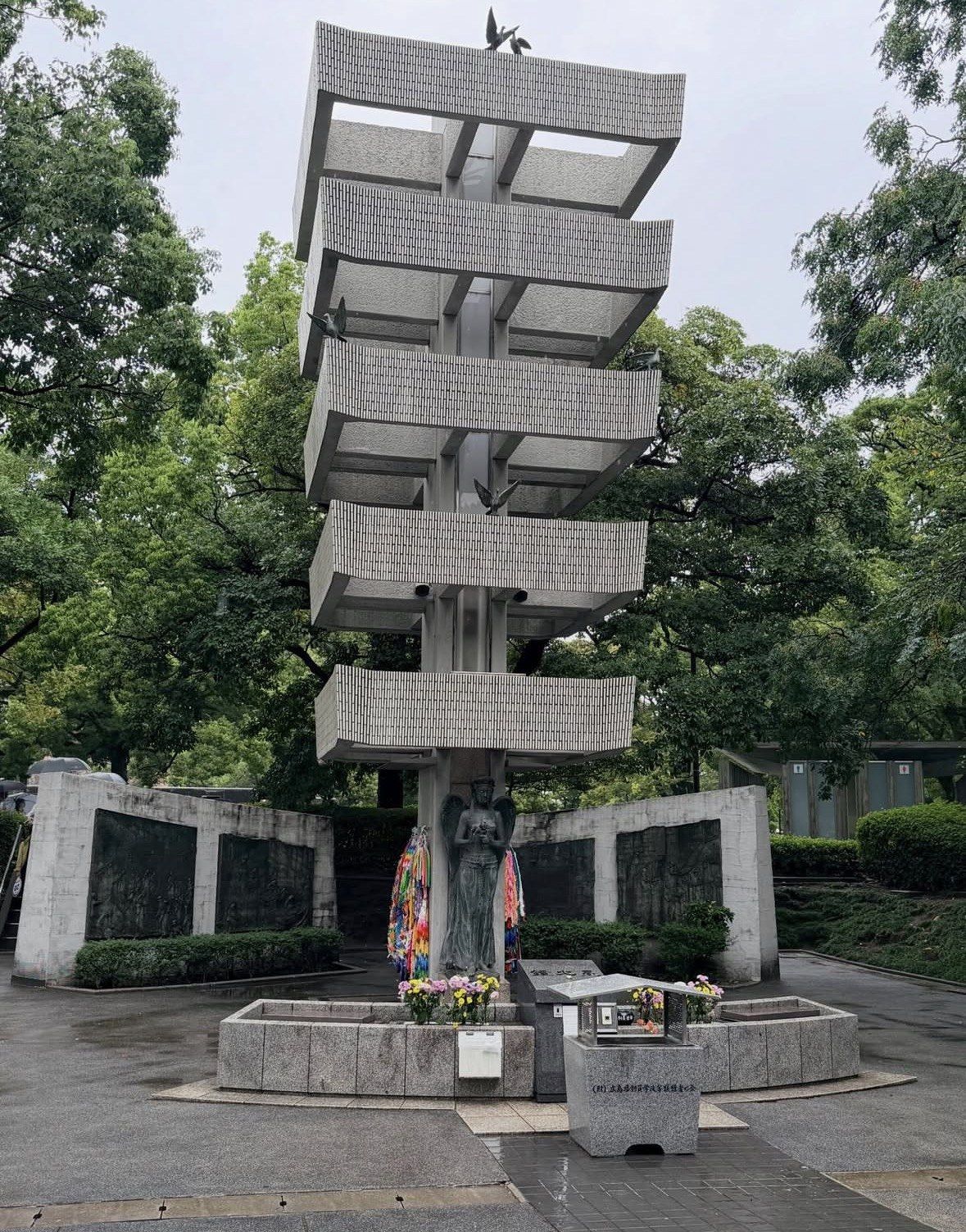
The city itself is tighter than first-time visitors expect. On the model one-day course published by the prefectural tourism board, the stops alone come to about 220 minutes: half an hour at the Atomic Bomb Dome, an hour in the Peace Memorial Museum, 45 minutes on the water and an hour at Itsukushima Shrine. Anything you add to that has to replace something, which is why only the short runs below sit honestly alongside the memorial park.
Two of the six are genuinely half-day trips: the sake quarter at Saijo, and the island if you hold yourself to the shrine and the town. Iwakuni runs long once the castle hill goes in. Okunoshima, Onomichi and Kure each want a whole day, mostly because of the transfers rather than the time you spend looking at anything.
| Destination | Direction | Getting there | Known for | How much of a day |
|---|
| Miyajima | West, across the bay | Straight out on tram route 2 to Hiroden-Miyajimaguchi, a short walk to the pier, then a boat of about 10 minutes | Itsukushima Shrine over the water, Mt Misen, the Treasure Hall and Senjokaku | Half a day with Peace Memorial Park; a full day once Mt Misen goes in |
|---|
| Iwakuni | West, into Yamaguchi | 44 minutes on the JR conventional line, then about 20 minutes on the Kintaikyo bus from in front of Iwakuni Station | Kintaikyo, a wooden arch bridge about 193 m long, with Iwakuni Castle above it | Long half-day; most of a day with the ropeway and the keep |
|---|
| Saijo | East, inland | One Sanyo Main Line train, 35 to 40 minutes, and the breweries are walking distance from JR Saijo Station | Sake Brewery Street, where most of the town's ten breweries stand | Half a day, and the easiest to add to a city morning |
|---|
| Okunoshima | East, in the inland sea | Via Mihara: about 20 minutes on the JR Kure Line to Tadanoumi, about 7 minutes on foot to the port, about 15 minutes by boat | Wild rabbits and roughly 4 km of coastline | Whole day |
|---|
| Onomichi | East, on the coast | Shin-Onomichi to JR Onomichi by local bus in about 15 minutes, or about 10 by taxi | A hillside walk linking 25 temples, the Mt Senkoji ropeway, the island-hopping cycle route | Whole day |
|---|
| Kure | East, along the harbours | The Yamato Museum stands within walking distance of JR Kure Station | The Yamato Museum and its 1/10-scale model of the battleship Yamato | Whole day, and the museum closes on Tuesdays |
|---|
Miyajima, the shrine island across the bay
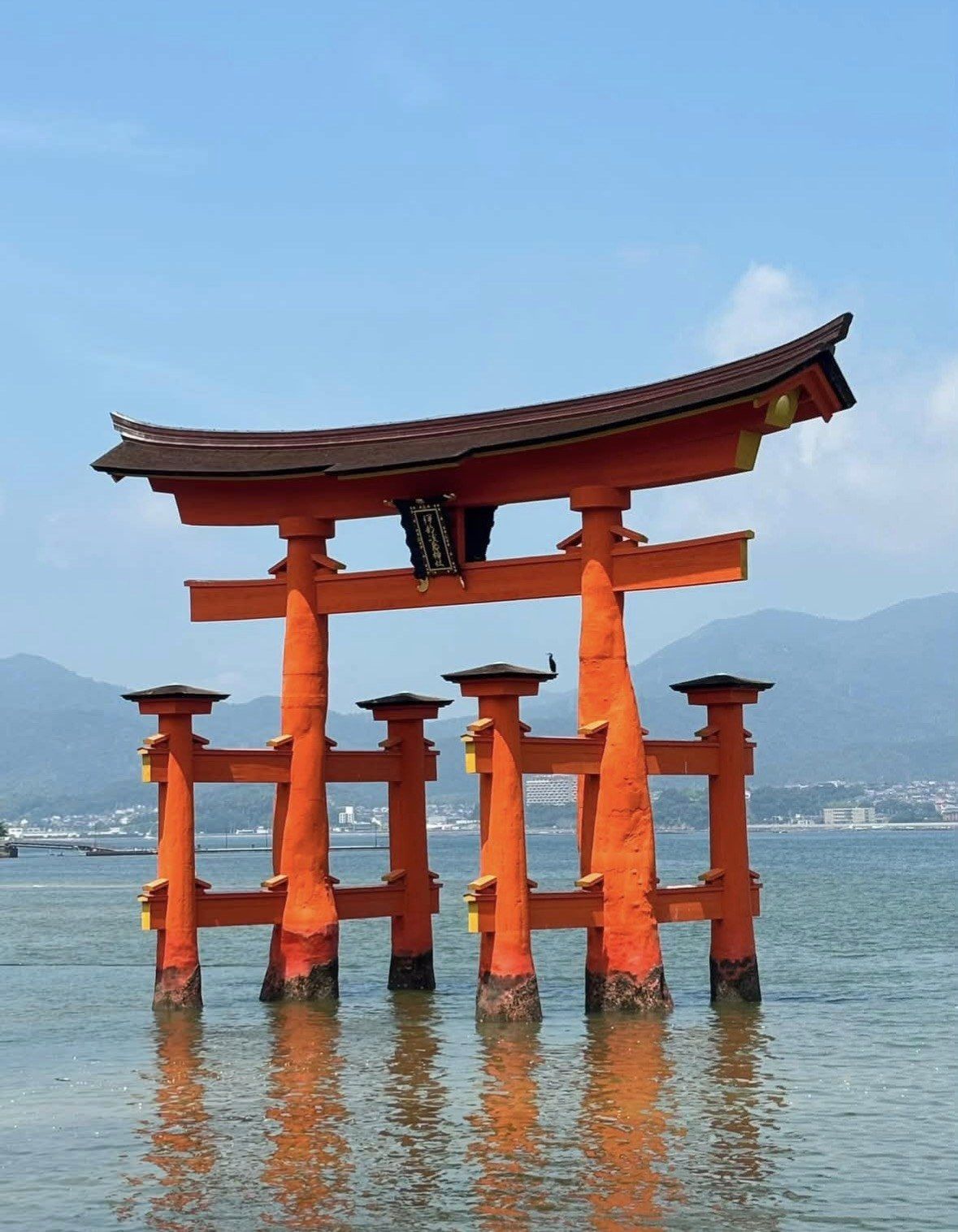
Almost everyone makes this side trip, and it is the one that slots into the same day as the memorial park without strain. The tram out of the city needs no transfer: route 2 ends at Hiroden-Miyajimaguchi, the pier is a short walk from the stop, and the boat takes about 10 minutes, leaving around every quarter of an hour in the middle of the day and every 20 to 30 minutes at the edges of it. A separate boat leaves the Motoyasu Bridge pier beside the park and reaches the island in about 45 minutes each way, which buys you the view along the water. The ferry page on this site compares the crossings in detail.
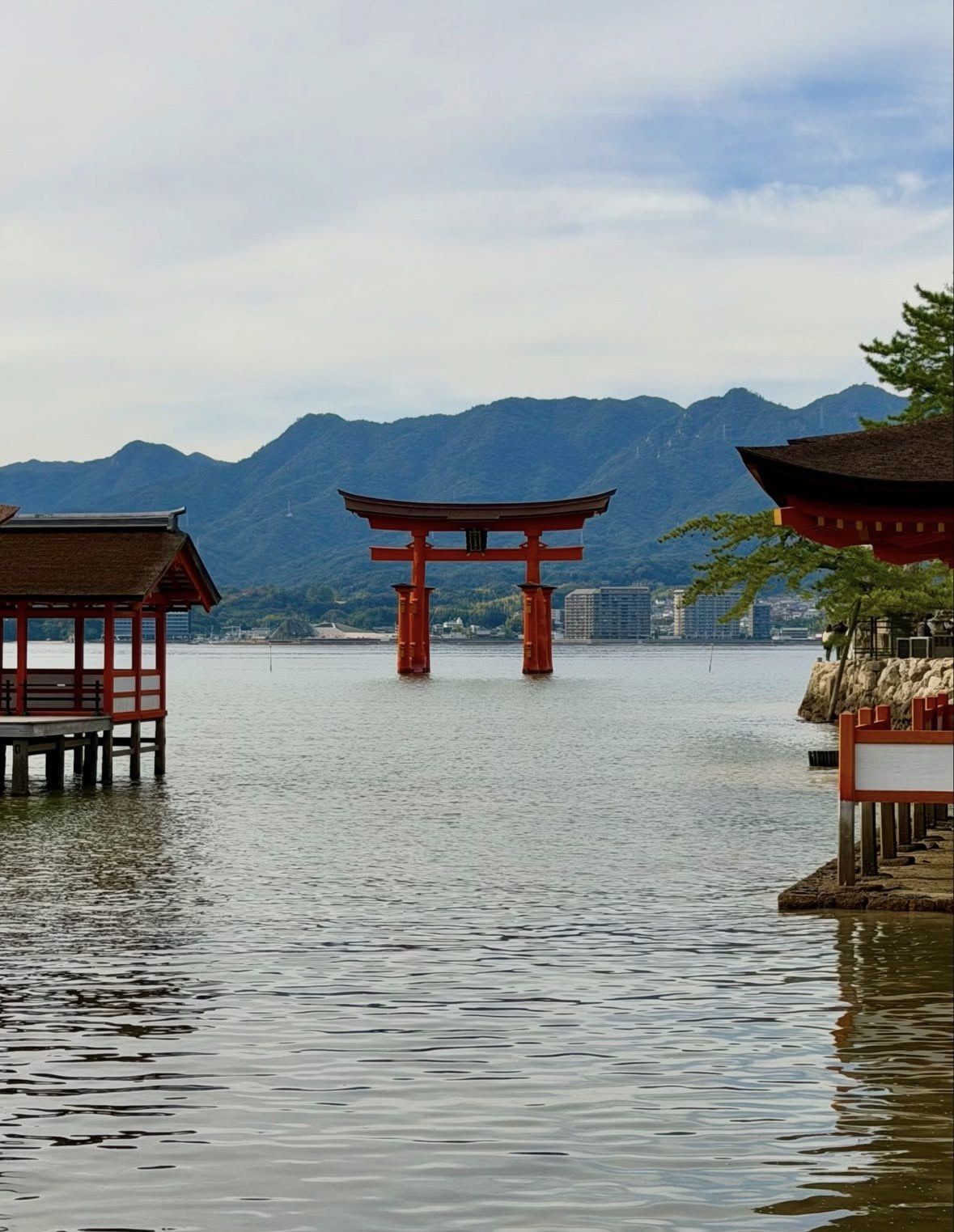
The shrine gives its founding as 593, the year Empress Suiko came to the throne, and the buildings you walk through follow the shinden-zukuri rebuilding ordered by Taira no Kiyomori in 1168. World Heritage registration came in 1996, and the shrine is a designated national treasure. Opening is at 6:30am, while the closing time decides how late a side trip can run: 6:00pm from 1 March to 14 October, 5:30pm from 15 October to 30 November and again from 4 January to the end of February, and 5:00pm through December. Two other buildings keep their own fixed hours all year, the Treasure Hall from 8:00am to 5:00pm and Senjokaku from 8:30am to 4:30pm.
Read the Miyajima Tourist Association's tide table before you fix the shape of the day. Each date gets two separate sets of windows, one for the hours when the shrine sits over water and one for the hours when you can walk out to the Great Torii, and a fair number of dates carry no torii-walk window at all. Nobody can promise you either sight at an hour of your choosing.
Mt Misen is the part that turns the island into a full day. Ropeway cars run uphill from 9:00 to 16:00 with the last descent at 16:30, the line comes in two linked sections, and the shuttle bus up to the Momijidani station starts at 9:50 and repeats at roughly 20-minute intervals. The ropeway also shuts for periodic inspection at announced intervals and stops for high wind, thunder or a power failure, so check the operator's notices for your date. Walking up takes a bigger bite out of the day: the Momijidani, Daisho-in and Omoto routes all start in the town and run about 1.5 to 2.5 hours, with Daisho-in listed at two, and the observatory at the top stands about a kilometre from the ropeway station.
Miyajima in one guided day
Eight hours with round-trip bus and ferry, a bilingual English and Spanish guide and entrance to Itsukushima Shrine, from JPY 7127, 4.9 ★ (740 reviews). Pick the meeting point that suits your direction of travel: Hiroden-Miyajimaguchi Station, or the berth outside Hiroshima Station.
★ 4.9/5 · 740 reviews
Iwakuni and Saijo, the two shortest runs
Iwakuni means the arched bridge and the castle above it. The JR conventional line takes 44 minutes and the Kintaikyo bus from in front of Iwakuni Station about 20 more, or about 15 by taxi; a Kodama covers Hiroshima to Shin-Iwakuni in 16 minutes with a bus of about 15 minutes at the other end, and a highway bus links Hiroshima Bus Center with Kintaikyo in about 50 minutes. The bridge measures about 193 m long and about 5 m wide, a curved sori-bashi built with wooden joinery and maki-gane and kasugai metal fasteners.
Floods run right through its history. Kikkawa Hirotaka's first bridge of 1673 was washed away; the 1674 rebuild stood about 276 years until a typhoon flood took it in 1950, it went back up in wood in 1953, and deteriorated timbers were renewed between 2002 and March 2004. Above the river, the castle ropeway runs 9:00 to 17:00 with departures every 15 minutes and a ride of about three minutes, and the keep opens 9:00 to 16:45 with last entry at 16:30, the present tower reconstructed in 1962 after the 1608 original was dismantled in 1615. Stay into the evening and the bridge is illuminated until 22:00. The Iwakuni page on this site has the full timings.
Saijo asks the least of your day. Trains on the Sanyo Main Line take 35 to 40 minutes from JR Hiroshima Station according to the local tourism body, the brewery quarter begins a short walk from JR Saijo Station, and ten breweries sit in the town, most of them along Sake Brewery Street. The Peace Memorial Museum opens at 7:30am, so start there, finish the park by lunch, and an afternoon among the breweries still fits with room to spare.
- Iwakuni, bridge only: a long half-day, and easiest after an early museum start
- Iwakuni with the ropeway and the keep: give it the whole day, working back from 16:30 last entry
- Saijo: the side trip that genuinely sits alongside Peace Memorial Park on one day
- Saijo arriving by air: the airport's first-floor stop 4 serves Shiraichi and Saijo
Full days east along the inland sea
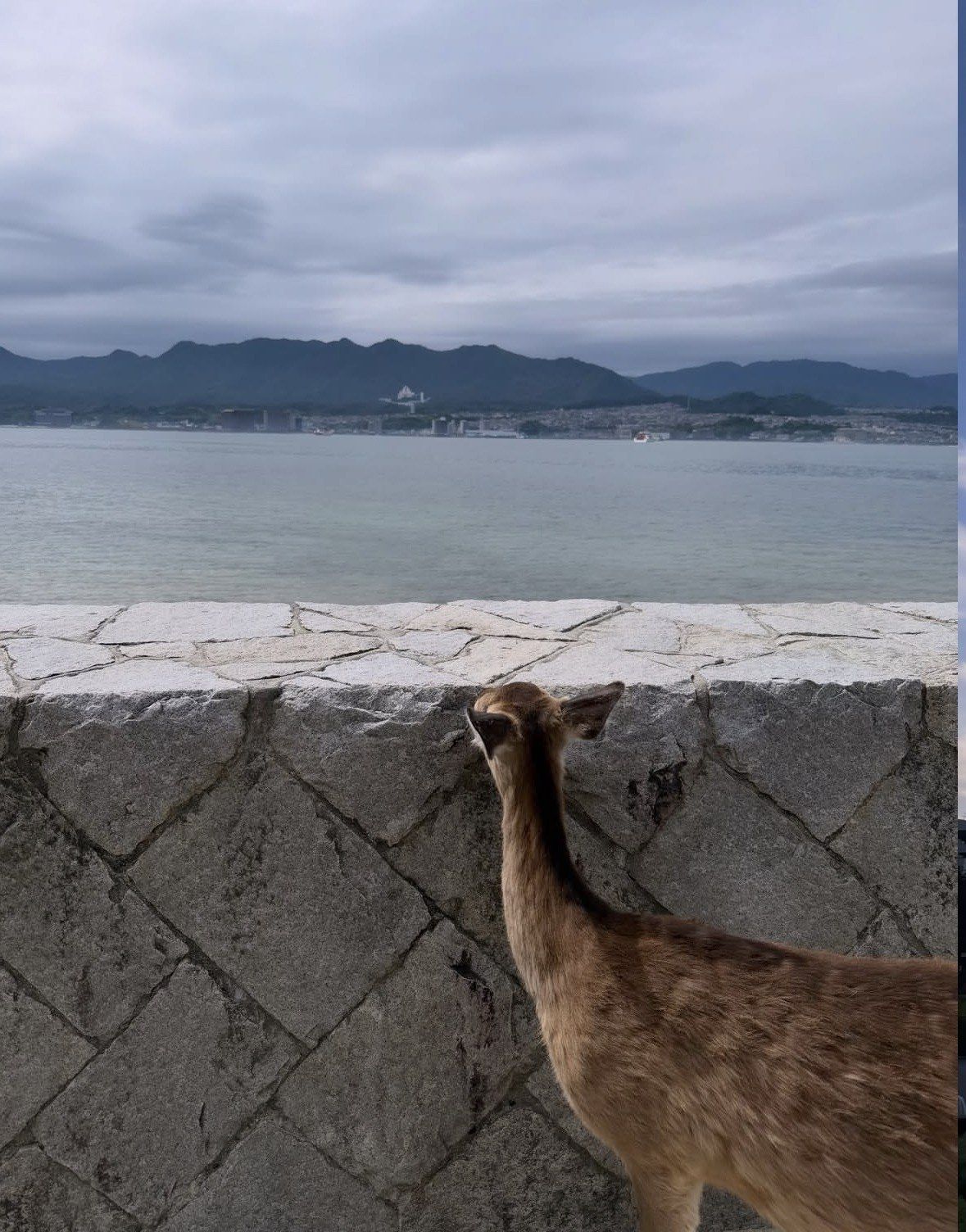
Okunoshima, the rabbit island, is three legs each way with no shortcuts. From Mihara the JR Kure Line takes about 20 minutes to Tadanoumi, it is about 7 minutes on foot to Tadanoumi Port, and the boat crosses in about 15 minutes. Once ashore you have roughly 4 km of coastline, and the prefectural tourism site suggests a bicycle to get round it. The rabbits are wild animals: do not chase them or pick them up, and offer suitable food only somewhere safe. Two other approaches exist, about 15 minutes by boat from Omishima's Mori Port and about 30 minutes from Mihara Port on the Rabbit Line, which sails only on Saturdays, Sundays and holidays. The island is privately held, so drivers leave vehicles at Tadanoumi Port.
Onomichi is the hillside port on the cycle route, and it repays a slow day. The city's own tourism pages put the kojimeguri temple walk, which links 25 temples from JR Onomichi Station, at about three hours. The Mt Senkoji ropeway generally runs 9:00 to 17:15, departing from both stations on the hour and at :15, :30 and :45 for a ride of about three minutes, with extra cars when it fills. Arriving by Shinkansen means a transfer: Shin-Onomichi to JR Onomichi is about 15 minutes by local bus or about 10 by taxi. This is also the mainland end of the island-hopping cycle route, which is why half the people on the station forecourt have bicycles with them.
Kure sits between the two, a naval harbour town you go to for one building. The Yamato Museum opens its exhibition rooms 9:00 to 18:00 with admission until 17:30, closes on Tuesdays and on the following day when the Tuesday is a public holiday, and stays open daily from 29 April to 5 May, 21 July to 31 August and 29 December to 3 January. The museum, home of the 1/10-scale Yamato model, stands at 5-20 Takaramachi, within walking distance of JR Kure Station. Check the day of the week before you commit the morning.
Which side trips work on public transport
All six are reachable without a car, though only some of them combine with the memorial park on the same day. Trams and trains out of Hiroshima Station handle Miyajima, Saijo and Iwakuni comfortably. The inland-sea destinations each add a transfer plus a boat or a bus at the far end, and that is where a day starts leaking time.
Two practical notes on the eastern runs. Okunoshima's Rabbit Line from Mihara Port looks like a shortcut but sails only on Saturdays, Sundays and holidays, so plan the Tadanoumi route by default. Onomichi's Shinkansen station stands apart from the town station, so build in the 15-minute bus or the 10-minute taxi at both ends.
Flying in or out of Hiroshima Airport changes the arithmetic, since the first-floor bus stops are sorted by destination and can save you a backtrack into the city: stop 2 for Hiroshima Station and Miyajima-guchi, stop 3 for Fukuyama, Mihara and Onomichi, stop 4 for Shiraichi and Saijo, stop 6 for Takehara and Tadanoumi. Mihara is about 38 minutes from the airport and Fukuyama about 65.
- Fits one day: Peace Memorial Park in the morning, Miyajima from early afternoon until the shrine closes
- Fits one day: Peace Memorial Park in the morning, Saijo's brewery street in the afternoon
- Tight but possible: Peace Memorial Park early, then Iwakuni for the bridge alone
- Needs its own day: Okunoshima, Onomichi, Kure, or Miyajima with Mt Misen
- Leave it alone: two destinations in opposite directions, or an island plus a mainland town
Guided days and scheduled services
On the island, a guided bus day takes care of the part people get wrong: which pier, which company, and which boat brings you back. The 8 hour 20 minute Hiroshima and Miyajima Full Day Bus Tour from Hiroshima begins in the Hotel Granvia Hiroshima 1F lobby, on the Shinkansen Plaza side north of the station, travels with a national government licensed English guide interpreter, and folds the Miyajima visitor tax, the other admissions and the transport into one arrangement, with lunch left out. Prices run from 25,000 yen, and the rating stands at 4.6 ★ (520 reviews).
Of the full-day options the lowest starting price belongs to Hiroshima & Miyajima Guided tour with Itsukushima Shrine & Ferry: 8 hours, bus and ferry both ways, a guide working in English and Spanish, and Itsukushima Shrine admission included. It has two meeting points, which matters here: Hiroden-Miyajimaguchi Station at 1-chome-11 Miyajimaguchi, Hatsukaichi, if you are already heading out of town, or outside Hiroshima Station at the Shinkansenguchi Hiroba bus berth between stops 8 and 9. Arrive 15 minutes early either way. From JPY 7127, 4.9 ★ (740 reviews).
A private day bends to your plan. Hiroshima & Miyajima in 1 Day: Private Tour, Licensed Guide gives 8 hours with a licensed local English-speaking guide who meets you on foot in Hiroshima and a walking itinerary built from 3 to 4 sites you choose off the operator's list; transport, ferry, entrance fees, lunch, a private vehicle and the Miyajima visitor tax sit outside the arrangement, and groups are not combined. It starts from 30,900 yen and rates 4.9 ★ (1,610 reviews). It suits families and anyone who wants to set the pace on the island themselves.
The guided days on this site cover the city and Miyajima. Saijo, Iwakuni, Onomichi, Kure and the rabbit island run on scheduled trains and boats, so for those the work is reading the timetable for your date and respecting the closing hours above.
Questions people ask
Is the rabbit island a good trip with young children?
Getting there is the slow part: a train to Tadanoumi, about 7 minutes on foot to the port and about 15 minutes afloat, then the same sequence back. Once ashore, roughly 4 km of coastline is easier on a rented bicycle, as the prefectural tourism site suggests. The rabbits are wild animals, so children should not chase them or pick them up, and food is offered only in a safe spot.
Can I reach Okunoshima directly from Mihara Port?
Yes, on the Rabbit Line, which takes about 30 minutes, but it sails only on Saturdays, Sundays and holidays. On a weekday, go via Tadanoumi: about 20 minutes on the JR Kure Line from Mihara, about 7 minutes on foot to the port and about 15 minutes by boat. A crossing of about 15 minutes also runs from Mori Port on Omishima.
What day should I avoid for Kure?
Tuesday. The Yamato Museum closes on Tuesdays, and on the following day when the Tuesday is a public holiday. Exhibition rooms open 9:00 to 18:00 with admission until 17:30, and the museum opens every day from 29 April to 5 May, 21 July to 31 August and 29 December to 3 January.
How late can I stay in Iwakuni?
The castle hill shuts first: the ropeway runs 9:00 to 17:00 and the keep takes its last visitors at 16:30, closing at 16:45. The bridge is illuminated until 22:00, so an evening walk by the river works as long as you have done the castle earlier.
Can I fit a side trip around the 6 August ceremony?
The ceremony in Peace Memorial Park takes place in front of the cenotaph between 8:00 and 8:50 a.m., with the silence falling at 8:15 a.m., so treat that morning as booked. Pair it with Saijo, 35 to 40 minutes away by train, or with the island, where the shrine stays open until 6:00pm in that season. The Peace Memorial Museum keeps August evenings long too, running to 8:00pm, and to 9:00pm on the 5th and 6th.
Read also