In shortBase yourself at Hiroshima Station if you have early trains or an airport bus, and in the Hondori and Kamiyacho centre if you want food and the shortest walk into Peace Memorial Park, about 20 minutes by streetcar line 1 or bus 24 to Hon-dori plus five minutes on foot. The riverside park edge suits a 7:30am museum start; Miyajima suits evening torii views.
7:30amPeace Memorial Museum opening
about 20 minStation to Hon-dori by tram
around 22:14Last boat off Miyajima
10:00amStation tour meeting time
Where to stay in Hiroshima, and how to choose
Hiroshima's hotel areas come down to four: the district around JR Hiroshima Station, the Hondori and Kamiyacho centre, the riverside edge beside Peace Memorial Park, and Miyajima itself. None of them is badly connected. Hiroden trams charge one flat fare anywhere on the network, including the long run out to Hiroden-Miyajimaguchi, and you pay as you get off rather than when boarding, with no tickets sold on board and IC cards touched both ways. What separates the areas is the shape of your first hour in the morning and your last hour at night.
The question most people agonise over is Hiroshima Station or the Peace Park area, and the honest answer depends on your trains. Book the station if you arrive late on a Shinkansen or leave on an early airport bus. Book the riverside if you intend to be inside the Peace Memorial Museum when the doors open at 7:30am. Book the centre if okonomiyaki and oysters within walking distance matter more than either. Book the island if the tide windows are the reason you came at all.
For a first visit with one guided day and one evening out, the best area to stay in Hiroshima is the Hondori and Kamiyacho centre. Hon-dori sits about five minutes on foot from the Peace Park area, the Nagarekawa eating district is reached directly from the Ebisucho or Hatchobori tram stops, and streetcar line 1 or bus 24 links the centre with the station in about 20 minutes.
| Area | From Hiroshima Station | Close by on foot | Evenings |
|---|
| Station district | You are already there: tram routes 1 and 5 toward Hiroshima Port, 2 toward Hiroden-Miyajimaguchi, 6 toward Eba | Mazda Zoom-Zoom Stadium about 10 minutes from the south exit; Ekinishi on the west side | Ekinishi lanes in renovated Showa-era buildings |
|---|
| Hondori and Kamiyacho | About 20 minutes on streetcar line 1 or bus 24 to Hon-dori | About five minutes to the Peace Park area | Nagarekawa izakaya, ryotei, bars and okonomiyaki restaurants |
|---|
| Peace Park and riverside | About 25 minutes by tram to Genbaku Dome-mae, then about 10 minutes walking | Orizuru Tower about one minute from Genbaku Dome-mae; Memorial Hall beside the museum | Castle keep exterior and Ninomaru illuminated from sunset until 22:00 |
|---|
| Miyajima | Tram route 2 to Hiroden-Miyajimaguchi, then about 10 minutes by boat | Itsukushima Shrine, the Treasure Hall and Senjokaku | The island after the day boats; last sailing off around 22:14 |
|---|
The station district for late arrivals and early departures
The station earns its keep at the two ends of a trip. Tokyo to Hiroshima by Nozomi takes about 3 hours 54 minutes, Shin-Osaka about 1 hour 25 minutes and Kyoto about 1 hour 40, and the last train that reaches Hiroshima at all is Nozomi 89, arriving at 23:54. If your dates fall inside 21 to 23 November or 25 December to 5 January, the peak periods listed for 2026-27 in which Nozomi seating is entirely reserved, settle the train before you settle the room.
Airport buses use Platform 5 at the station's Shinkansen Gate and take about 50 minutes, with departures from the station between 05:55 and 19:00 and from the airport between 07:20 and 21:55. Nothing else in the city puts a 05:55 bus within a few minutes of your room.
Sightseeing from the doorstep is a station-side advantage. The Meiple-loop bus both leaves from and returns to the Shinkansen exit, making 42 trips a day at 10 to 15 minute intervals between 9:00 and 18:00, and takes in the Prefectural Art Museum, Hiroshima Castle, the Hiroshima Museum of Art, Genbaku Dome-mae, Heiwa Koen-mae and Namiki-dori Iriguchi in that order. Trams from the stop outside begin at 5:56 on route 5 and finish at 23:09 on route 2.
Evenings on this side mean Ekinishi, the lane district on the west side of the station set in renovated Showa-era buildings. It is a shorter night than the centre offers, and that suits a 10:00am start the next morning.
The bus day that starts at the station
If you book a station-side room, this 8-hour day forms up at the Shinkansen ticket gate on 2F at 10:00am and carries the ferry, the island and the museum admission inside one schedule, from 19,488 yen, 5.0 ★ (9,528 reviews).
★ 5.0/5 · 9,528 reviews
Hondori and Kamiyacho for food and the park walk
The centre puts you between the memorial sites and the food. From Hiroshima Station's south exit it is about 20 minutes on streetcar line 1 or bus 24 to Hon-dori, then roughly five minutes on foot to the Peace Park area, and Hatchobori is where you change onto the Hakushima Line for Shukkeien-mae if the garden is on your list.
Nagarekawa is one of the city's largest entertainment districts, packed with izakaya, ryotei, bars and well-known okonomiyaki restaurants, and it is reached directly from the Ebisucho or Hatchobori stops. The okonomiyaki you will be walking to arrives layered instead of mixed: cabbage, meat or seafood, fried noodles and an egg stacked onto a thin crepe base, an order credited to Mitchan Sohonten. Oysters are the other local default here, small, slightly sweet and low in liquid, which is why they arrive grilled on izakaya and teppanyaki menus.
Two dates argue for a centre room. Toukasan, the Enryu-ji festival in Mikawa-cho that opens yukata season, takes place with Yukata de Kinsai over three days from the first Friday of June around Chuo-dori, a few minutes from most hotels here. Ebisu Taisai takes over Ebisu Shrine in Ebisucho on 18, 19 and 20 November, and on the evening of the 19th Chuo-dori is pedestrianised from 19:15 to 22:00.
The riverside edge beside Peace Memorial Park
This is the base for people who want the memorial early and quiet. A room here pays for itself on one number from the museum's own site, 7:30am, when the doors open; closing supplies the rest of the case, at 7:00pm from March through July and again from September through November, 8:00pm in August, 9:00pm on the 5th and 6th, and 6:00pm from December to February. Both the early-morning hour and the late-evening extension sit behind an online reservation for the permanent exhibition, so arrange that before you check in. Keep two gaps off your booking dates as well: 30 and 31 December, and the few days in mid-February given over to an exhibition changeover.
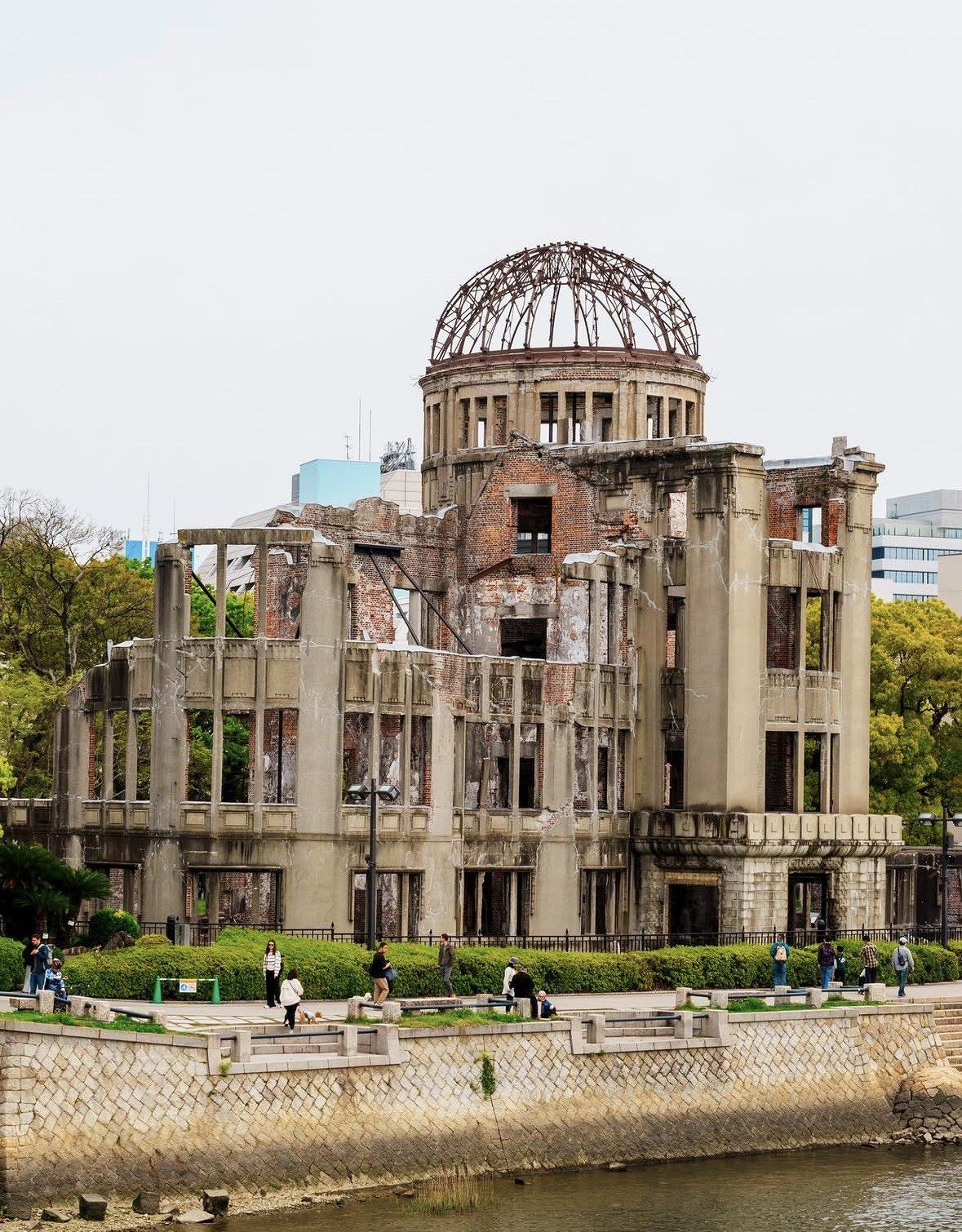
What you walk out into is a composed landscape rather than open ground, approximately 122,100 square metres of it, finished on 1 April 1954 from a scheme by three architects including Kenzo Tange that came first among 145 competition entries, with the Atomic Bomb Dome added to the UNESCO World Heritage List on 5 December 1996 at the committee meeting in Mérida, Mexico. A second institution stands next to the museum, the National Peace Memorial Hall, which starts at 8:30am and shuts at 6:00pm from March to November, 7:00pm in August and 5:00pm from December to February. Public parking there is limited to visitors with physical disabilities and the Hall itself points people toward public transport, which is one more reason to sleep within walking reach of it.
Evenings are thin on this edge of the centre. Orizuru Tower is about one minute from the Genbaku Dome-mae tram stop at 1-2-1 Ootemachi and runs 10:00 to 18:00, with ticket sales and deck admission stopping 30 minutes earlier; the loop bus finishes at 18:00. The castle quarter holds up after dark, since the keep exterior and the Ninomaru are illuminated from sunset until 22:00, but dinner means a tram or a walk toward Nagarekawa.
If your trip includes 6 August, book here. The Peace Memorial Ceremony is held in the park in front of the cenotaph from 8:00 to 8:50 a.m., with a one-minute silence at 8:15 a.m., and walking to it removes the morning transport problem entirely.
Staying on Miyajima: what the last boats decide
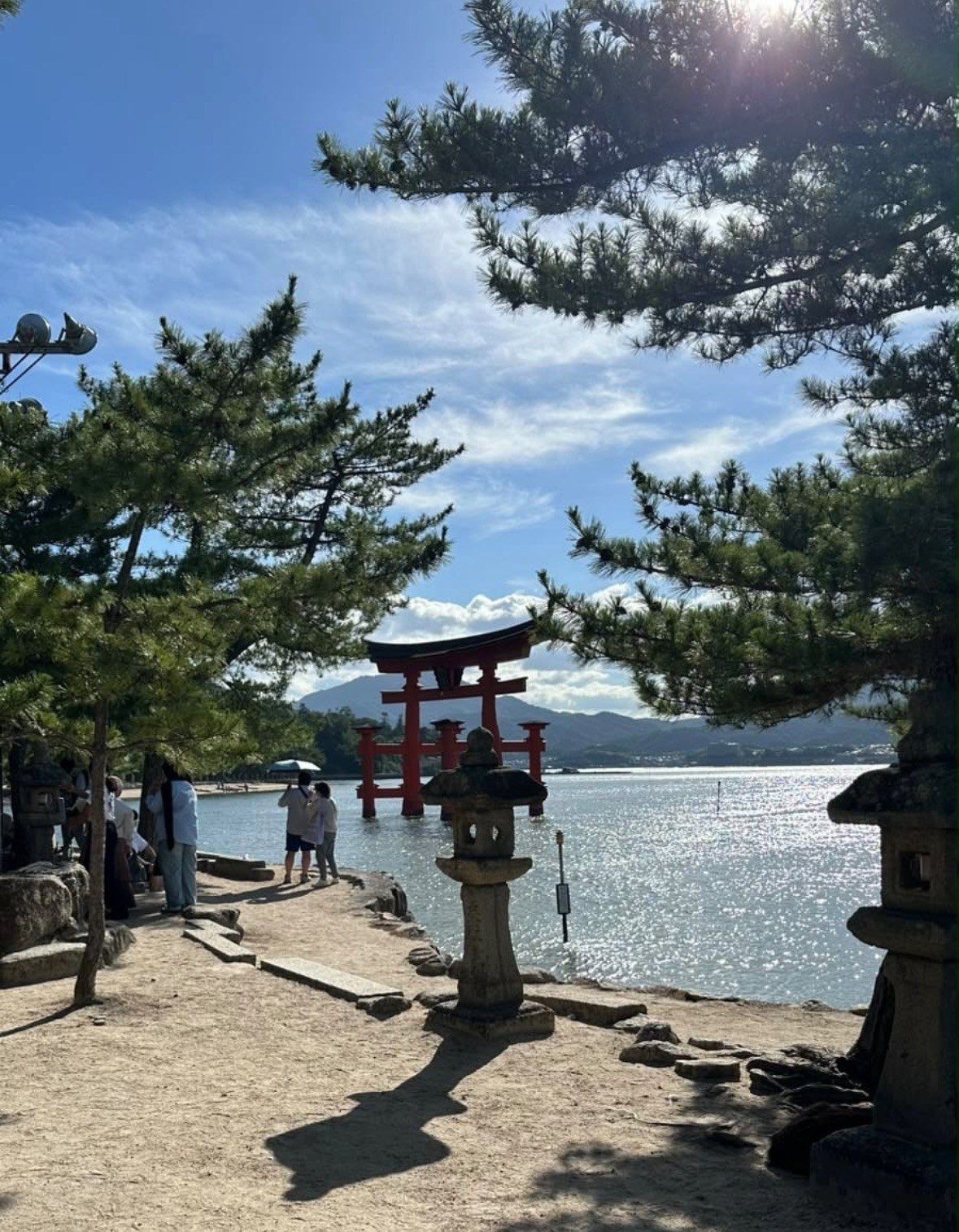
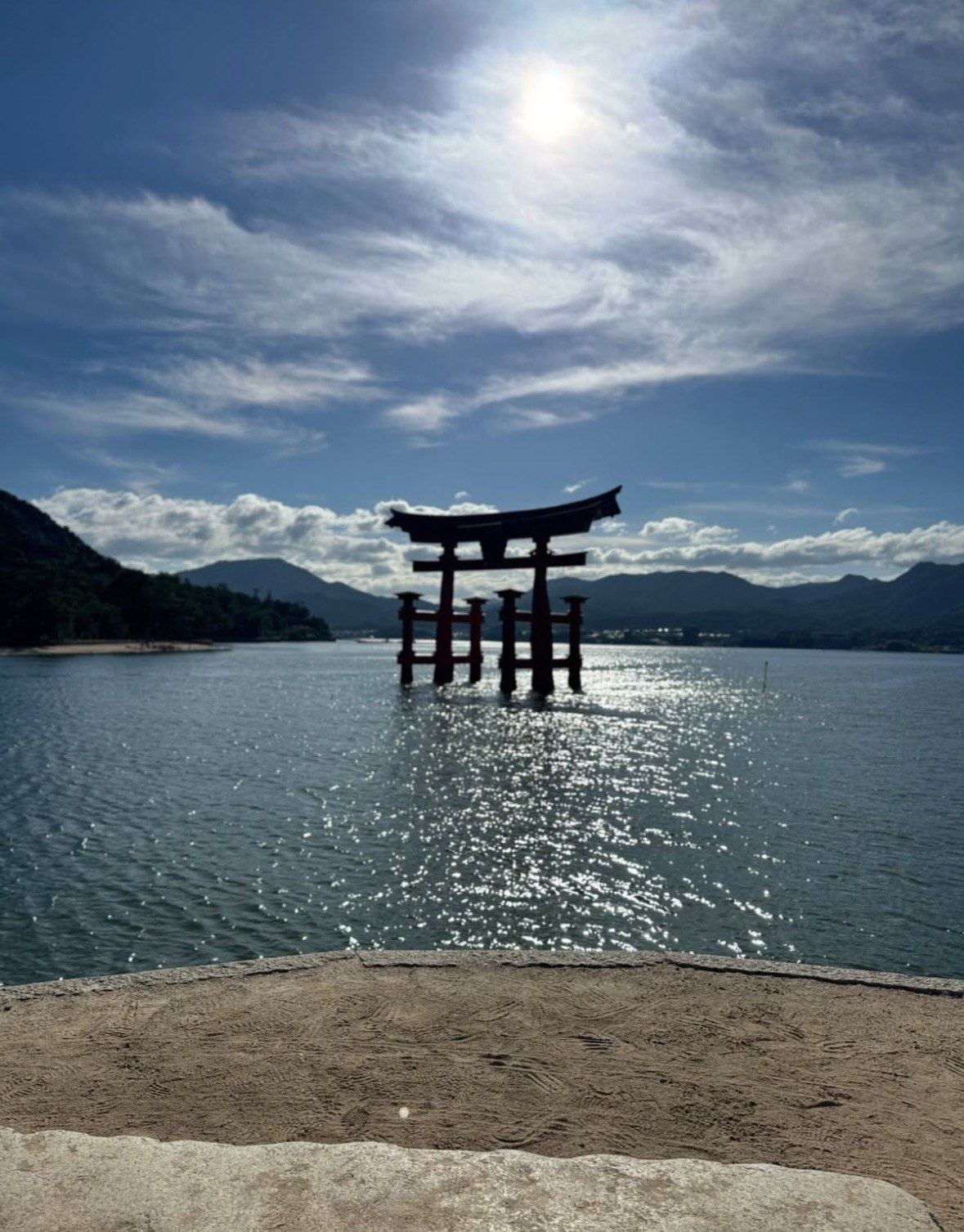
An overnight on the island buys you the shrine before the day boats and the torii after they have gone. The figure that justifies the room is 6:30am, the hour Itsukushima Shrine starts every day of the year. Closing is the part that moves, and it shortens as the year goes on: 6:00pm from 1 March to 14 October, the longest stretch, then 5:30pm from 15 October to 30 November and again from 4 January to the end of February, 5:00pm through December, and on 1 January a run from midnight until 6:30pm. Two neighbours hold steady whatever the season, the Treasure Hall from 8:00am to 5:00pm and Senjokaku from 8:30am to 4:30pm.
Book the island around the tide. Windows in which the shrine reads as floating, and separate ones for walking out to the Great Torii, are published day by day by the Miyajima Tourist Association, and plenty of dates carry no torii-walk window at all. Sleeping on Miyajima is the only way to be there for more than one of those windows, which is why a fixed-departure day trip cannot promise either sight.
Boats take about 10 minutes from Miyajima-guchi, leaving roughly every 15 minutes through the middle of the day and thinning to gaps of 20 or 30 minutes at either end of it. The JR ferry's regular timetable puts the final departure off the island in the 22:00 hour, around 22:14, and the last run out to it around 22:42; check the sailings posted for your own date instead of relying on the pattern. On the mainland side, the whole-route tram to Hiroden-Miyajimaguchi leaves the Hiroshima Station stop for the last time at 22:31. That is the real cost of an island night: dinner in Nagarekawa and a bed on Miyajima do not combine, and a 10:00am meeting time at Hiroshima Station means an early boat back.
Island mornings have their own clock. Uphill ropeway cars start at 9:00 and stop at 16:00, the final descent is 16:30, the shuttle up to the Momijidani station begins at 9:50 and repeats at roughly 20 minute intervals, and the line goes out of service altogether for periodic inspection at announced intervals or when there is high wind, thunder or a power failure. Walkers have the Momijidani, Daisho-in and Omoto routes, 1.5 to 2.5 hours each from town with the Daisho-in course listed at two hours, plus about a kilometre between the summit observatory and the ropeway station.
Where guided days start, and which base makes mornings easy
Meeting points sit in two places, the station and the centre. The 8-hour Peaceful Hiroshima & Miyajima UNESCO 1 Day Bus Tour gathers on 2F at Hiroshima station in front of the Shinkansen ticket gate, North Gate side, at 2-37 Matsubaracho, Minami-ku, for a 10:00am start, with staff holding a green and white flag; the round-trip ferry, the air-conditioned vehicle, an English-speaking local guide, bus audio guidance in EN, FR, ES, IT, DE, PT and UA and admission for the Peace Memorial Museum, Miyajima Island and Itsukushima Shrine are inside the arrangement, from 19,488 yen, 5.0 ★ (9,528 reviews). Evenings in the centre are covered by the 3-hour Hiroshima Izakaya Food and Drink Night Tour, which forms up in front of the GUCCI display outside the Hiroshima Fukuya department store, from 13,500 yen, 4.9 ★ (355 reviews).
Hotel pickup is not included on either, so the walk or tram ride to the meeting point belongs in the decision.
- Arriving close to 23:54 or leaving on the 05:55 airport bus: the station district.
- A 10:00am guided bus day plus dinner afterwards: the station district, with the centre a single tram ride away.
- Food first, with Hon-dori about five minutes on foot from the Peace Park area: Hondori and Kamiyacho.
- The museum at 7:30am with a reservation, then the park monuments on foot: the riverside edge.
- Tide windows, the shrine from 6:30am and the island after the day boats: Miyajima, accepting a last sailing around 22:14.
Questions people ask
Can I see Peace Memorial Park and Miyajima from one base, or should I move hotels?
One base in the city handles both: route 2 runs from the Hiroshima Station tram stop all the way to Hiroden-Miyajimaguchi, and the boat from there takes about 10 minutes. Move hotels only if you want the island in the evening or at 6:30am, when the shrine opens. Splitting two nights between the city and Miyajima is the version that lets the tide decide your island half.
How late can I eat out before the trams stop?
From the Hiroshima Station stop the last route 2 departure is at 23:09, and the first in the morning is 5:56 on route 5. Nagarekawa is reached directly from the Ebisucho or Hatchobori stops, so a centre or station room keeps the late walk short. With a room on Miyajima, plan your evening backwards from the last sailing off the island, around 22:14.
Does staying on Miyajima still leave time for Mt. Misen?
Yes, and an overnight is the easiest way to be on the first stage early. Upward cars run between 9:00 and 16:00, the last one down leaves at 16:30, and the shuttle up to the Momijidani station begins at 9:50 and comes round about every 20 minutes. Look at the operator's notices before you count on any of it, because the line stops for periodic inspection at announced intervals and high wind, thunder or a power failure can close it on the day.
Which area suits a winter visit?
The riverside edge or the centre. From December to February the Peace Memorial Museum closes at 6:00pm and Itsukushima Shrine at 5:00pm through December, so afternoons on the island end early and the city holds the evening. January averages a daily high of 9.9C and is the driest month at 46.2 mm, which makes the walk between the park, the Dome and the castle quarter straightforward.
Is a station room useful if I am flying out of Hiroshima Airport?
It is the simplest option. Airport buses leave from Platform 5 at the station's Shinkansen Gate, take about 50 minutes, and the route runs 51 departures a day toward the airport with the first out at 05:55 and the last at 19:00. There is also a Hiroshima Bus Center service of roughly 55 minutes with about 30 departures between 05:55 and 18:45.
Read also