In shortOnomichi sits east of Hiroshima and works as a day trip by rail. Take a Shinkansen east, change at Fukuyama and ride into JR Onomichi Station, where the temple walk begins: 25 temples, about three hours according to the city's own tourism pages. Trains that stop at Shin-Onomichi instead leave you a local bus of about 15 minutes, or a taxi of about 10.
25 templeson the Onomichi temple walk
about 3 hourswalk from JR Onomichi Station
9:00-17:15Mt Senkoji ropeway hours
about 15 minutesShin-Onomichi bus into town
Getting to Onomichi from Hiroshima by train
The whole route comes down to which station you step off at. JR Onomichi Station stands in the town itself, close to the water, and the city's temple route starts from its door. Shin-Onomichi, the Shinkansen station, sits apart from the slopes and the harbour, and the city's tourism pages put a local bus into town at about 15 minutes and a taxi at about 10.
Aim for a change at Fukuyama if you want the fast trains to do the work. Fukuyama is on the Nozomi stop list and Sakura services run through it as well, so you come east on a quick leg and then pick up a local train for Onomichi. Travel times move with the service you catch and with the connection you land on, so read the timetable for your own date instead of trusting a round figure.
Leave Hiroshima early whichever way you go in. Two clocks matter at the other end: the ropeway finishes for the day at 17:15, and the temple route takes roughly three hours on its own, which does not leave much of an afternoon if you arrive after lunch.
| Station you arrive at | Where it leaves you | Getting into town |
|---|
| JR Onomichi, via a change at Fukuyama | In the town, a short walk from the water | On foot; the 25-temple route starts at the station |
|---|
| Shin-Onomichi, on the Shinkansen | Away from the slopes and the harbour | Local bus about 15 minutes, or about 10 minutes by taxi |
|---|
Things to do in Onomichi once you are off the train
Onomichi is built on a slope that drops straight into a narrow strait, so almost everything is either a climb or a walk along the water. The temple route, which the city calls kojimeguri, links 25 temples and begins at JR Onomichi Station; the official figure is about three hours, and that assumes you keep moving rather than sitting down halfway up.
Between the temples the town is a grid of stepped lanes, cats, small galleries and coffee places in old houses, most of them one or two people wide and none of them in a hurry. The harbour side is the flat half: a waterfront walk, warehouses turned into shops, and boats crossing the strait to the islands directly opposite, which is how the first hop of the island route is made without a bridge.
- The temple route from JR Onomichi Station, 25 temples, about three hours at a steady pace
- The Mt Senkoji ropeway to the viewpoint over the strait and the bridges
- The stepped lanes and slope cafes between the temples, best taken downhill
- The waterfront and the short crossings to the near islands
- The start of the bridge cycling route, which leaves from the same waterfront
The Mt Senkoji ropeway and the way back down
Ride up and walk down. The ropeway runs generally from 9:00 to 17:15, with cars leaving both stations on the hour and at :15, :30 and :45, extra ones put on when they fill, and the ride itself takes about three minutes. That gets you to the top of the slope in the time it takes to find your ticket, and the view across the strait to the first bridge is the reason people come up.
Walking back down is where the town pays off, because the descent runs through the temple paths and the stepped lanes rather than along a road. Hiroshima's August average high is 32.8C, which tells you what a summer climb on foot would feel like on these slopes; in July and August take the cars up and keep the walking for the shade of the lanes.
The last cars go at 17:15, so fix that as the end of your hillside plan and work backwards. Autumn afternoons are short in this part of the prefecture: Japanese maple normally colours around 22 November in Hiroshima and ginkgo around 15 November, by which point the light has gone well before the ropeway stops.
Where the bridge cycling route begins
The island-hopping route known as the Shimanami Kaido starts at Onomichi's waterfront and runs across a chain of bridges toward Imabari on Shikoku. The first leg is a boat rather than a bridge, since the channel in front of the town is crossed by the short ferries, after which the bridges take over island by island.
Riding the full chain and getting back to Hiroshima in the same day is not a realistic plan. Treat it as an out-and-back: ride as far as the bridges you want, turn around, and keep the town for the end of the afternoon. Rental and one-way drop-off arrangements change, so confirm what the cycle terminal actually allows before you commit to a direction.
A guided ride in Hiroshima first
Three to four hours across Hiroshima's flat centre with bike, helmet, bottled water and an English-speaking guide, from 11,000 yen, 4.9 ★ (617 reviews), which pairs well with a bridge day out east.
★ 4.9/5 · 617 reviews
How a day splits between the town and the bridges
Pick one of the two halves and commit. A town day looks like this: an early train east, the temple route from the station through the morning at the official three hours, lunch somewhere in the lanes, the ropeway up in the afternoon and the walk down, then the harbour before the train back. There is no spare hour in that for a bike.
A cycling day flips it. Get to the waterfront as early as the trains allow, cross the channel, ride the bridges you have time for, and come back for the ropeway if you can make it before the last cars at 17:15. The slopes keep for another visit.
On half a day the sequence is short and it works: the ropeway up on arrival, down on foot through the temple paths and the stepped lanes, a coffee stop, the waterfront, and back on a train. You will see a handful of the 25 temples rather than the route end to end, which is the right trade with a few hours in hand.
With a guide, or on your own schedule
Onomichi is a walking town and the hillside does the explaining, but the day has to be timed by you: the connection at Fukuyama, the three-hour route, the 17:15 ropeway cut-off and the train home. Nothing about it is complicated once the order is set.
The guided options on this site run in Hiroshima rather than in Onomichi, which makes them the other half of a two-day plan. Hiroshima & Miyajima in 1 Day: Private Tour, Licensed Guide gives you 8 hours with a licensed local English-speaking guide met on foot in the city, with the walking itinerary built from 3 to 4 sites you choose off the operator's list, from 30,900 yen, 4.9 ★ (1,610 reviews). Transport, the ferry, entrance fees, lunch and the Miyajima visitor tax sit outside the arrangement.
If it is the riding that draws you east, Hiroshima in a Nutshell: Morning Bike Adventure covers the flat city centre in 3 to 4 hours with bike, helmet, bottled water and an English-speaking guide, from 11,000 yen, 4.9 ★ (617 reviews). It meets at 4-5-4 Otemachi, Naka-ku, and it is a sensible way to spend a Hiroshima morning the day before you ride the bridges from Onomichi.
Questions people ask
Can I reach Onomichi from Hiroshima Airport instead of the city?
Yes. Airport buses are arranged by destination on the first floor, and stop 3 serves Fukuyama, Mihara and Onomichi. For scale, the Fukuyama run is scheduled at about 65 minutes with six departures each way per day, and Mihara at about 38 minutes with five each way, so the service is thin and worth checking before you count on it.
Can I add Okunoshima, the rabbit island, to the same trip?
It fits better as a separate day, since it hangs off Mihara rather than Onomichi. From Mihara Station the JR Kure Line takes about 20 minutes to Tadanoumi, then about 7 minutes on foot to Tadanoumi Port and about 15 minutes by boat. There is also a Rabbit Line boat from Mihara Port in about 30 minutes, but it runs only on Saturdays, Sundays and holidays. The rabbits are wild animals and should not be chased or picked up.
Can I do Onomichi and Miyajima on the same day?
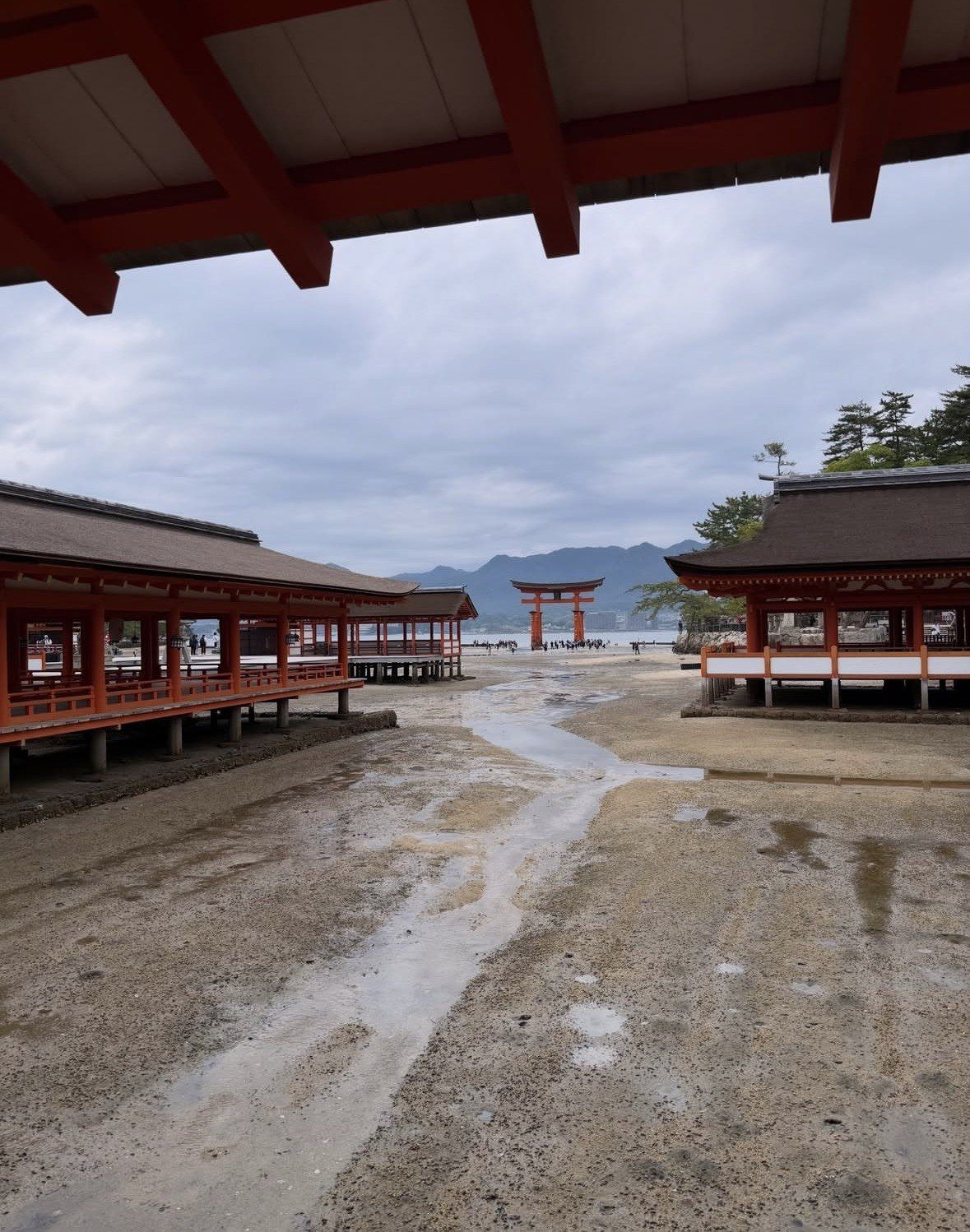
No, and trying ruins both. They lie in opposite directions from Hiroshima, and Miyajima has to be planned around the Miyajima Tourist Association's daily tide table, which gives separate windows for the shrine appearing to float and for walking out to the Great Torii. Itsukushima Shrine also closes at 6:00pm only from 1 March to 14 October, dropping to 5:30pm from 15 October to 30 November, so the island needs the afternoon to itself.
Is Shin-Onomichi a useful station to aim for?
Only if your train happens to call there. Shin-Onomichi is the Shinkansen station and it sits away from the slopes, the temples and the harbour, so you add a local bus of about 15 minutes or a taxi of about 10 at each end of the day. JR Onomichi Station puts you at the start of the 25-temple route on foot, which is why a change for the local train is the better arrival.
Read also